
Addicted to Habits: How to Help My Child Become More Self-Aware?
Our habits shape who we become, often without our noticing. Through the repetition and awareness developed in martial arts, children can learn to recognize their patterns, question their choices, and build better habits with intention.
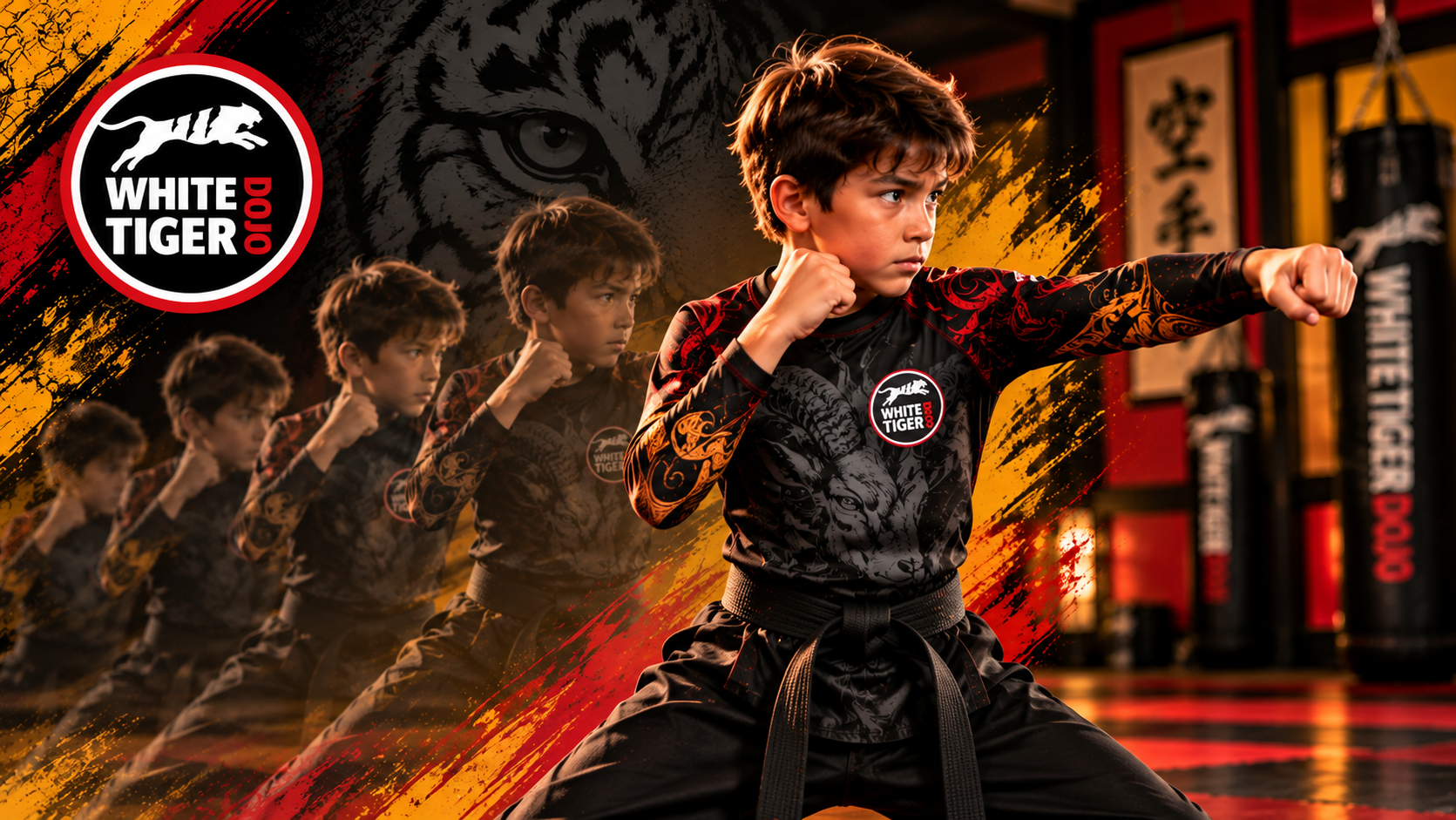
BERKELEY HEIGHTS, NJ: We all have habits. From a martial arts perspective, I believe habits come from our need to survive. One way habits do this is by making us more efficient. Set routines eventually form habits that don’t require forethought and thereby allow us to conserve energy and better prioritize its use. These patterns are so habitual that sometimes we create them without even realizing it.
How Habits Develop Without Us Realizing It
We are social creatures who are unavoidably affected by our circle of influences. As babies, we learn by mimicking or modeling the behavior of others. As we grow older we continue to mimic the habits of our friends and family without judgment. Often, it isn’t until adulthood that we recognize the value of these borrowed behaviors.
If we want to get the best out of our habits, we need to make sure they are impacting us in a positive way.
How Martial Arts Training Builds Better Habits
When teaching martial arts, my habit of choice is known as kata, or pre-arranged movement sets.
In kata training we learn to organize our body’s movements into a pattern. Adhering to a pattern of movement creates awareness and discipline within the body and mind. Kata training also highlights previous habits of thought and movement.
Kata Training Develops Self-Awareness
By becoming more attuned to how accurately or inaccurately we can move our body, we reunite the body with the mind. Clear communication between the two makes us more aware of our habits and therefore we choose them with more discretion.
Learning to Recognize Good and Bad Habits
A good practice is to go through your day trying to become aware of which behaviors you engage in on a routine basis. This may be difficult at first, but as your awareness grows, take the time to discover which habits are beneficial to you, which negatively impact you, and which are superfluous.
For example, a habit of my own is the use of the phrase ‘no worries’. Since it doesn’t impact me negatively or positively, we can label it superfluous.
Understanding Where Our Habits Come From
Going a step further, consider the origins of some of your habits. For instance, when I picked up the above phrase, it was 22 years ago at a Rutgers University lacrosse camp. I befriended an Australian teammate, and although I only knew him for a summer, I’ve been using the phrase ‘no worries’ ever since.
The type of critical self-inquiry required by this exercise takes time and patience, but eventually it will become just another habit.
Building Self-Awareness Through Martial Arts at White Tiger Dojo
At White Tiger Dojo in Berkeley Heights, NJ, we use martial arts training not only to teach students how to move, but to help them become more aware of why they move, think, and react the way they do. The more aware we become of our habits, the better prepared we are to decide which ones are worth keeping—and which ones it's time to change.