Berkeley Heights, NJ  —  908.665.8983

Insights & Updates

The Dojo Blog

Tips, stories, and news from White Tiger Dojo.

62 posts

A Choice to Control: How to Help Raise a Responsible Child?

A Choice to Control: How to Help Raise a Responsible Child?

Discipline imposed from the outside only goes so far. Real responsibility begins when children learn to govern themselves, make thoughtful choices, and understand that self-control is something they develop, not something we can give them.

Read more
A Father's Worth

A Father's Worth

Fatherhood, much like earning a black belt, is not a destination but an ongoing responsibility. A personal reflection on the lessons we learn as parents, the example we set, and the importance of continuing to grow alongside our children.

Read more
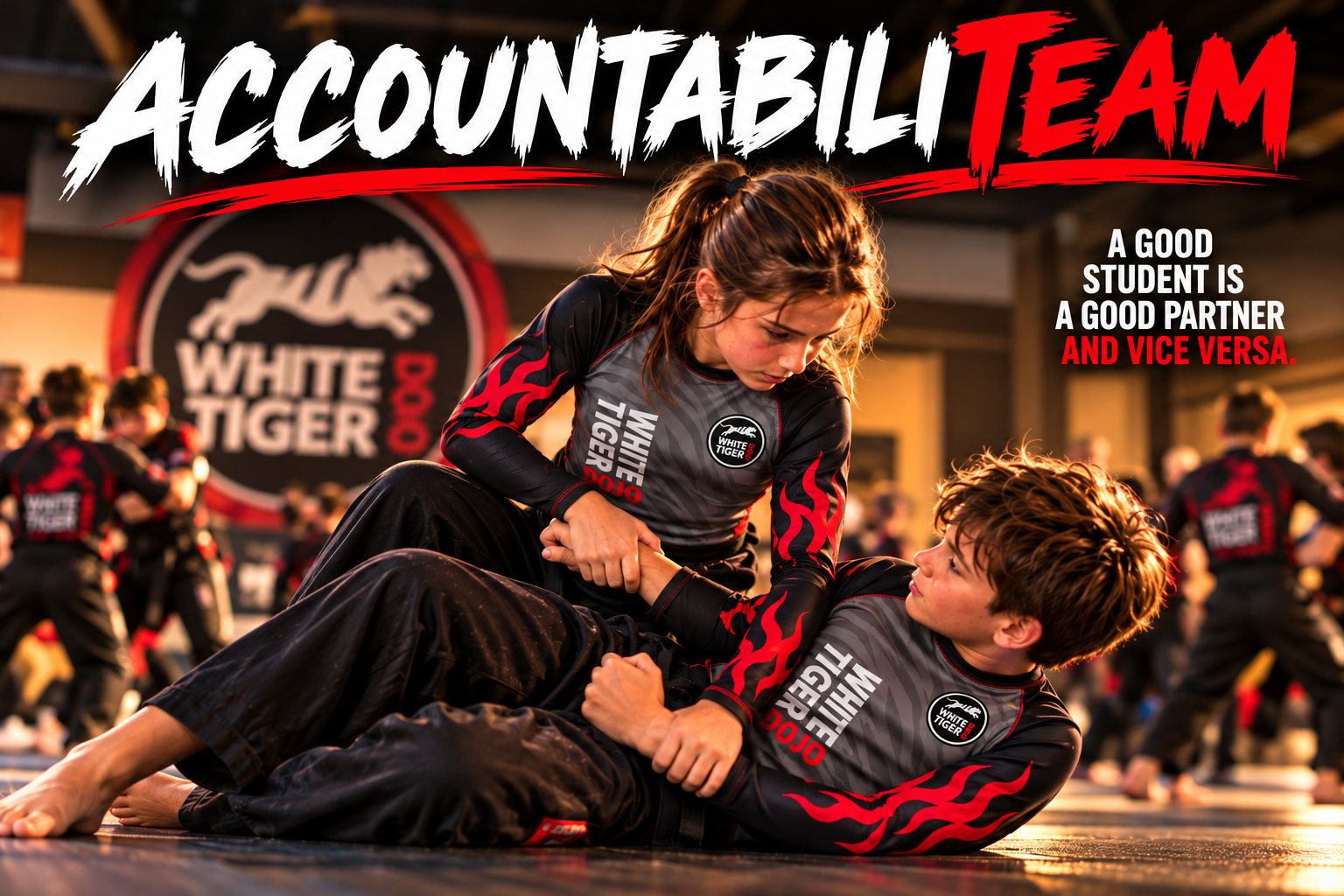
Accountabiliteam

Accountabiliteam

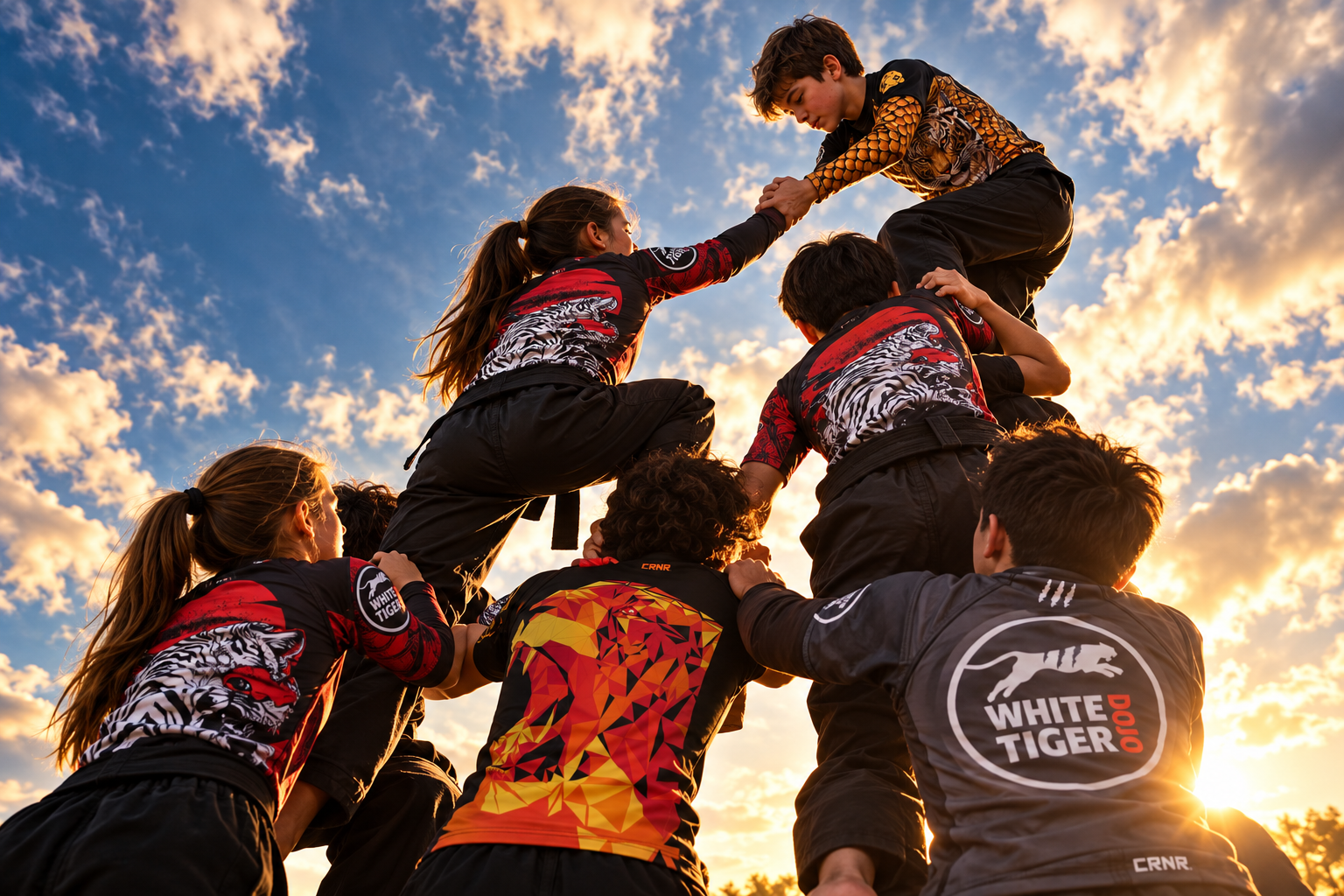
Martial arts may seem like an individual pursuit, but no student improves alone. At White Tiger Dojo, teamwork, trust, and accountability help students develop skills that extend far beyond the mat.

Read more
Addicted to Habits: How to Help My Child Become More Self-Aware?

Addicted to Habits: How to Help My Child Become More Self-Aware?

Our habits shape who we become, often without our noticing. Through the repetition and awareness developed in martial arts, children can learn to recognize their patterns, question their choices, and build better habits with intention.

Read more
Aggressively Inarticulate: How to Empower My Child's Voice?

Aggressively Inarticulate: How to Empower My Child's Voice?

Having something to say and knowing how to say it are two different skills. Helping children communicate clearly, confidently, and with conviction gives them the ability to stand up for themselves without resorting to aggression.

Read more
All of the Failure Behind Success: How Can I Help My Child Become Resilient?

All of the Failure Behind Success: How Can I Help My Child Become Resilient?

We celebrate success but rarely acknowledge the countless failures that make it possible. Teaching children to value effort, persistence, and the lessons learned along the way may be the greatest preparation we can give them for life.

Read more
Altar of Scrutiny: How to Keep My Child from Blindly Following the Crowd?

Altar of Scrutiny: How to Keep My Child from Blindly Following the Crowd?

Teaching children what to think is easy compared with teaching them how to think. Encouraging curiosity, healthy skepticism, and the courage to ask why helps develop independent thinkers who can make decisions for themselves.

Read more
Always Run It Out: Teaching Kids Perseverance

Always Run It Out: Teaching Kids Perseverance

A childhood baseball lesson became a lifelong philosophy: Always Run It Out. From an unforgettable bunt grand slam to academics, athletics, and opening White Tiger Dojo, sometimes the greatest victories come from simply refusing to quit.

Read more
Anyone Can Lead: How Do I Help My Child Become a Leader?

Anyone Can Lead: How Do I Help My Child Become a Leader?

Leadership isn't reserved for the loudest, strongest, or most popular person in the room. It begins with personal responsibility, initiative, and the willingness to do what's right, even when no one else is stepping forward.

Read more
Are We Undermining Your Child's Training? Belts vs. Skills

Are We Undermining Your Child's Training? Belts vs. Skills

Are we measuring our children's success by the belts they earn or the skills they develop? At White Tiger Dojo, rank is a recognition of competence, not a substitute for it. Here's why focusing on the reward instead of the process may be undermining your child's growth.

Read more
Automa-Teen (2015): How Do We Balance Academic Pressure and Childhood?

Automa-Teen (2015): How Do We Balance Academic Pressure and Childhood?

When achievement becomes the measure of a child's worth, something important gets lost. A look at the pressures we place on young people and why developing thoughtful, capable human beings matters more than producing perfect résumés.

Read more
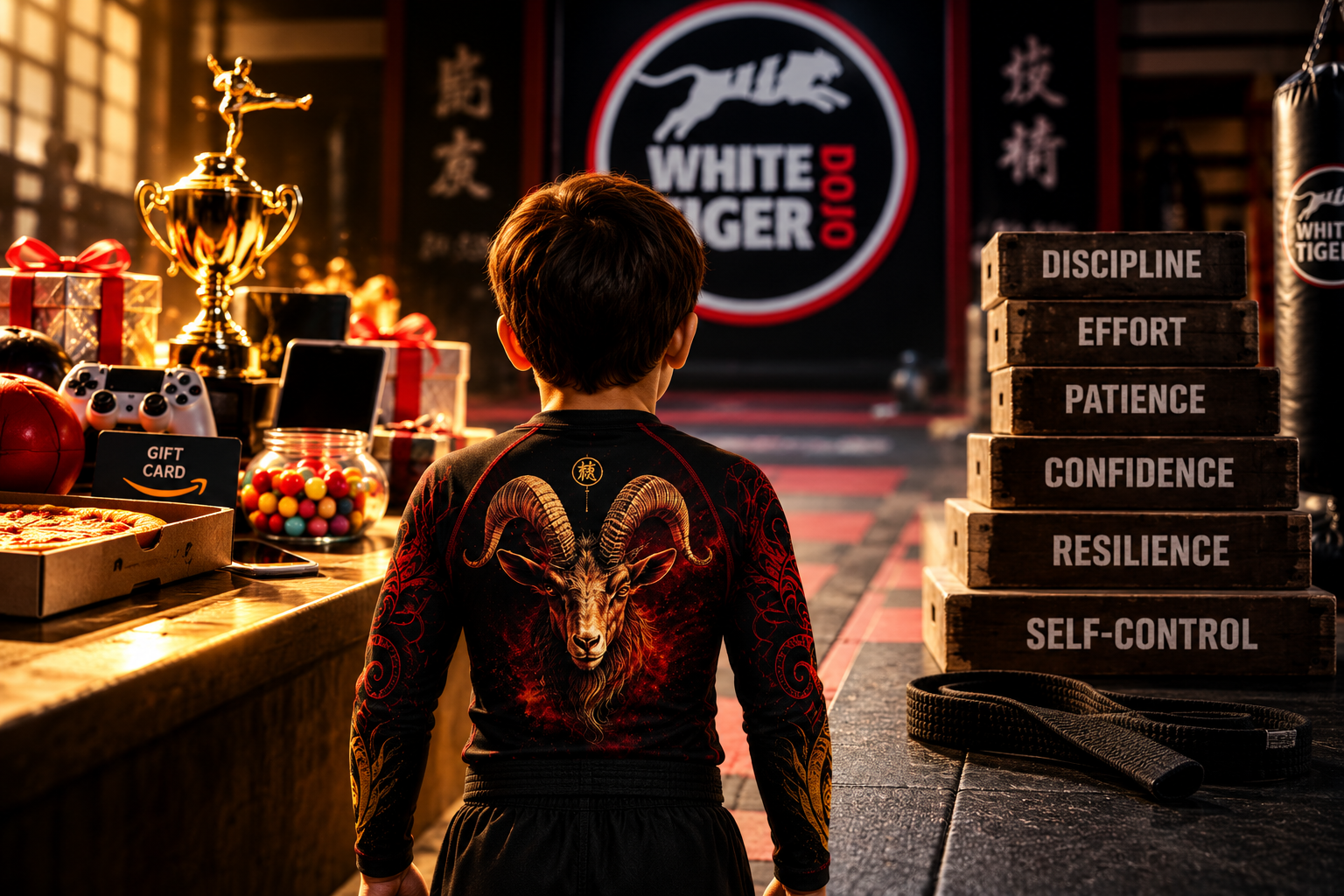
Bribe Me Towards Success: How Do I Help My Child Become Motivated?

Bribe Me Towards Success: How Do I Help My Child Become Motivated?

There's a difference between rewarding a child's effort and teaching them to expect a reward for everything they do. Are we motivating our children to succeed, or making them dependent on the next prize?

Read more
Broken and the “Golden Repair”: How Do I Help My Child Deal with Failure?

Broken and the “Golden Repair”: How Do I Help My Child Deal with Failure?

In the Japanese art of kintsugi, broken pottery is repaired with gold rather than having its cracks concealed. Perhaps our children should learn the same lesson: setbacks need not diminish us. They can become part of our strength.

Read more
Daunting: How Do I Help My Child Stop Comparing Themselves to Others?

Daunting: How Do I Help My Child Stop Comparing Themselves to Others?

It's easy for children to measure themselves against someone else's achievements and overlook their own progress. Real confidence grows when they learn to recognize where they are, embrace the challenge ahead, and keep moving forward.

Read more
Digital Demise: How Do I Manage My Child's Screen Time?

Digital Demise: How Do I Manage My Child's Screen Time?

As screens occupy more of our children's attention, what happens to movement, imagination, and face-to-face interaction? A look at the importance of physical activity and helping children develop a healthier relationship with technology.

Read more
Do the Right Thing: How Do I Build Integrity in My Child?

Do the Right Thing: How Do I Build Integrity in My Child?

When confronted with bullying or injustice, children have more choices than becoming a bully, victim, or bystander. There is a fourth option: becoming a leader who has the awareness, courage, and integrity to do what's right.

Read more
Don’t Scare Your Children, Prepare Your Children

Don’t Scare Your Children, Prepare Your Children

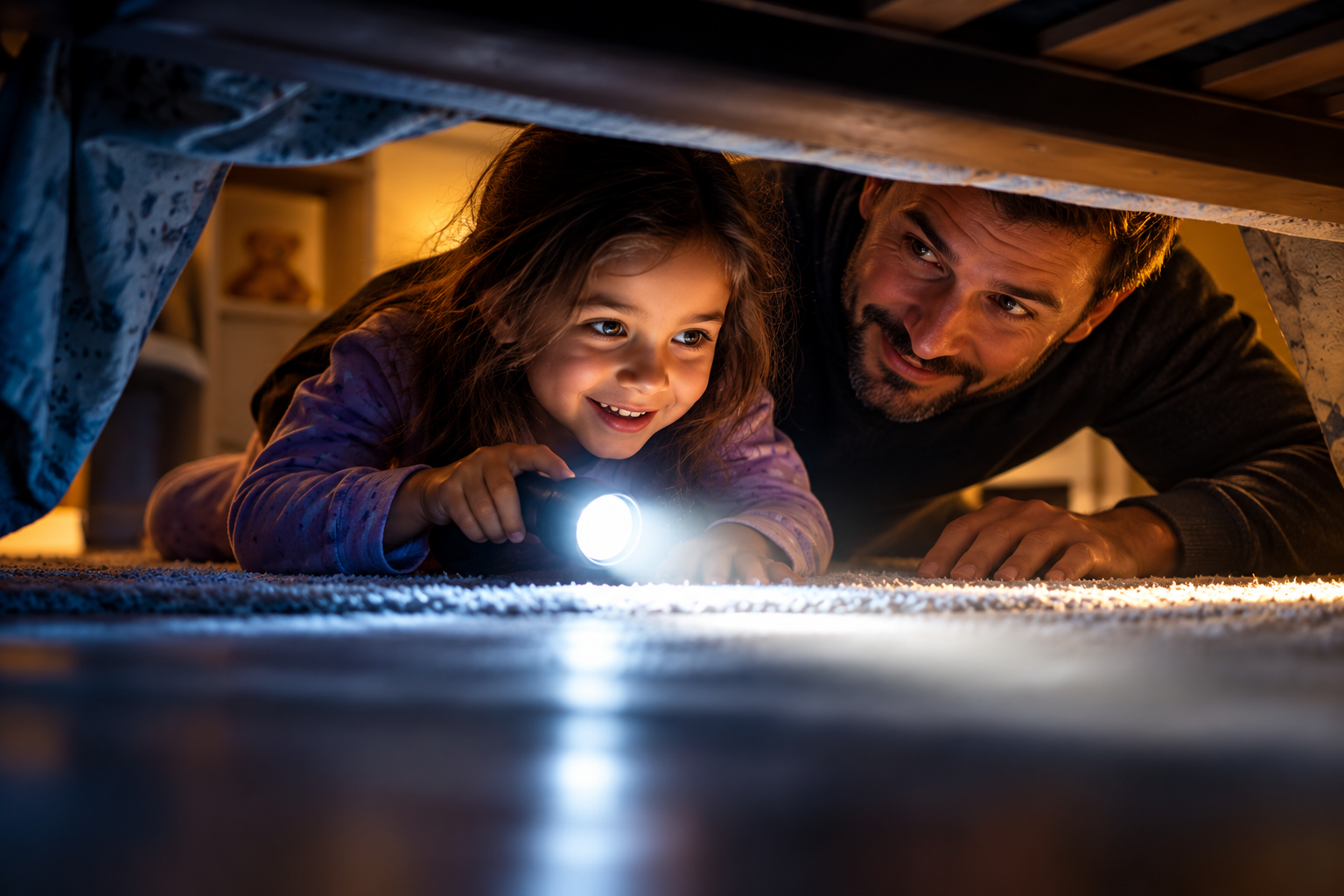
Teaching children about safety doesn't have to frighten them. Games, observation and age-appropriate challenges can build awareness, confidence and problem-solving skills.

Read more
Don't Trust Me: Teaching Kids Critical Thinking and Accountability

Don't Trust Me: Teaching Kids Critical Thinking and Accountability

What happens when a martial arts instructor encourages children to question him, challenge his mistakes, and hold him accountable? They learn something far more valuable than obedience. They learn to think independently, recognize inconsistencies, and take responsibility for their own decisions.

Read more
Everyone is Different: How Do I Instill Rugged Individualism in My Child?

Everyone is Different: How Do I Instill Rugged Individualism in My Child?

Every child learns, develops and progresses differently. The right challenge helps children build confidence, resilience and self-discipline without comparing themselves to everyone else.

Read more
Failing is Natural, Giving Up Should Not Be: How Do I Help My Child Through Frustration and Failure?

Failing is Natural, Giving Up Should Not Be: How Do I Help My Child Through Frustration and Failure?

Failure is a natural part of learning, but quitting doesn't have to be the response. Children develop resilience when we help them face frustration, adjust their approach, and discover what they're capable of through continued effort.

Read more
Fear of Change: How Do I Help My Child Handle Change?

Fear of Change: How Do I Help My Child Handle Change?

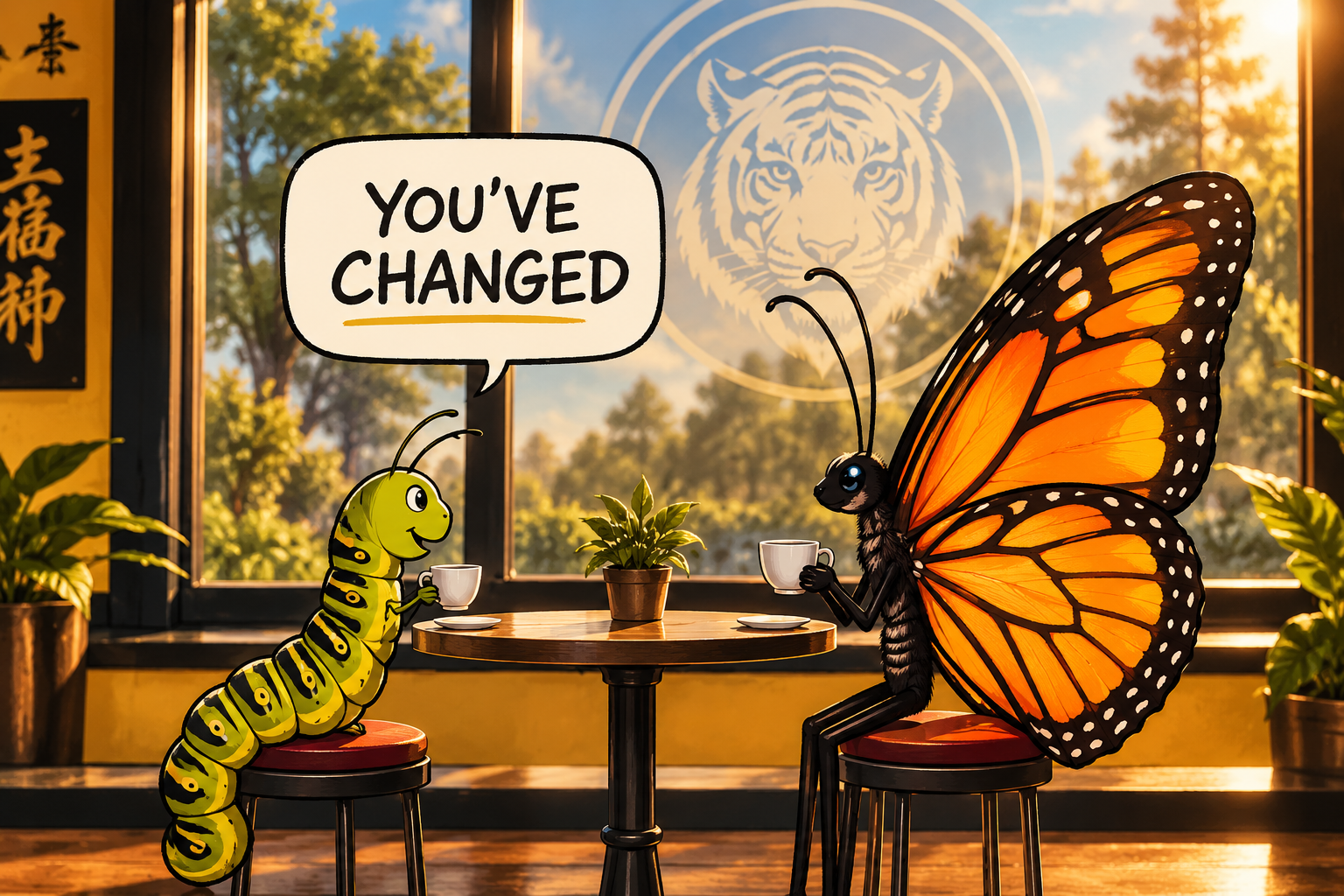
Change can be uncomfortable for children and adults alike. Learning to face uncertainty instead of always avoiding it can build confidence, resilience and self-discipline.

Read more
Four-Letter Words: How Do I Help My Child Take Ownership?

Four-Letter Words: How Do I Help My Child Take Ownership?

Taking ownership means accepting responsibility for our choices, habits and mistakes. That accountability is what gives children the opportunity to change, grow and become more independent.

Read more
Freedom’s Constraint: How Do I Help My Child Build Healthy Boundaries?

Freedom’s Constraint: How Do I Help My Child Build Healthy Boundaries?

True independence requires boundaries. Children who learn self-control, personal responsibility and when to say yes or no are better prepared to protect their values and relationships.

Read more
Giving Thanks

Giving Thanks

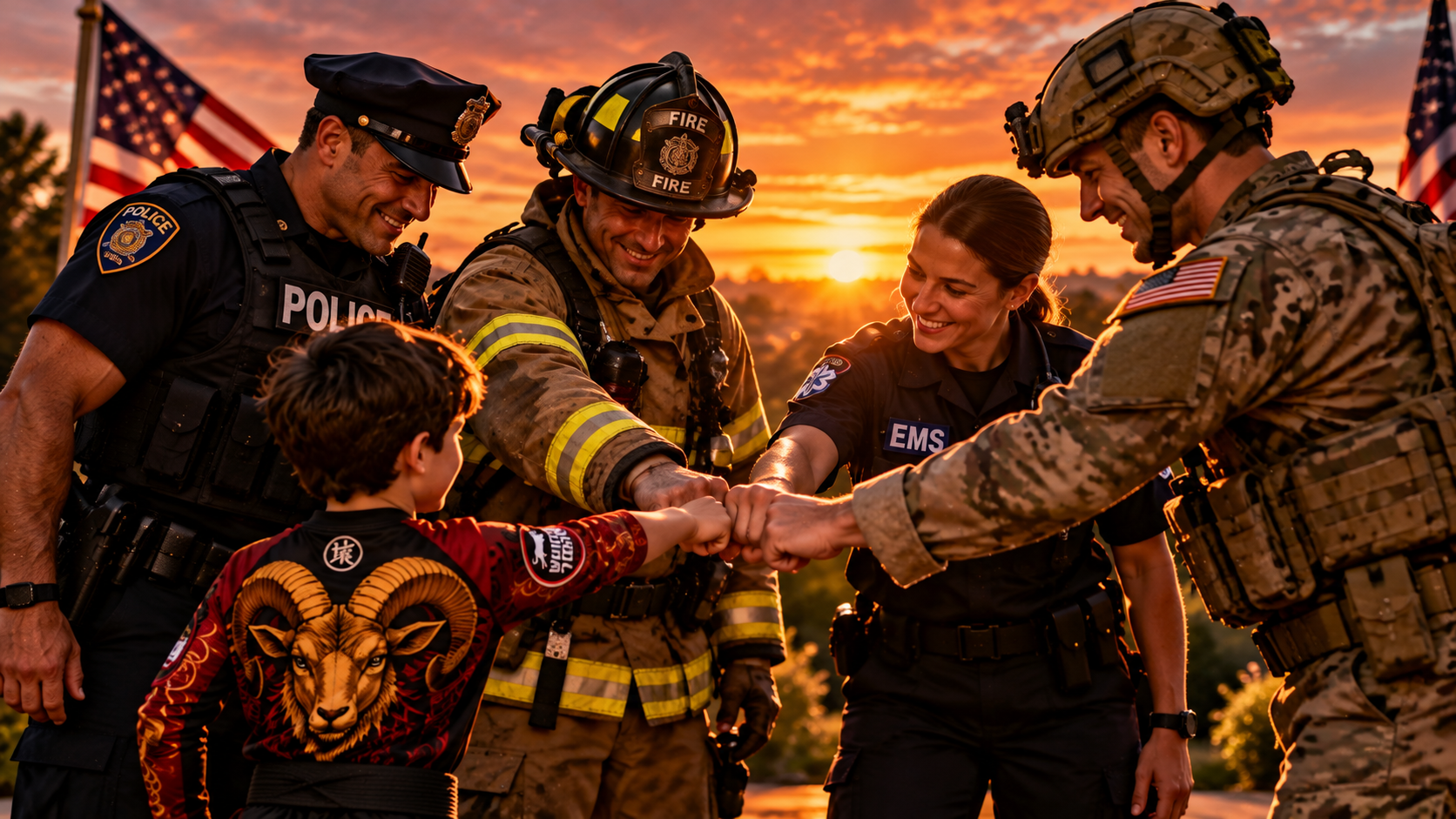
Some of the most important acts of service are the ones we never see. This Thanksgiving, take a moment to thank those who protect, serve, teach, support and shape our lives.

Read more
If You Know It, Show It: How do I Instill Values and High Standards in My Child?

If You Know It, Show It: How do I Instill Values and High Standards in My Child?

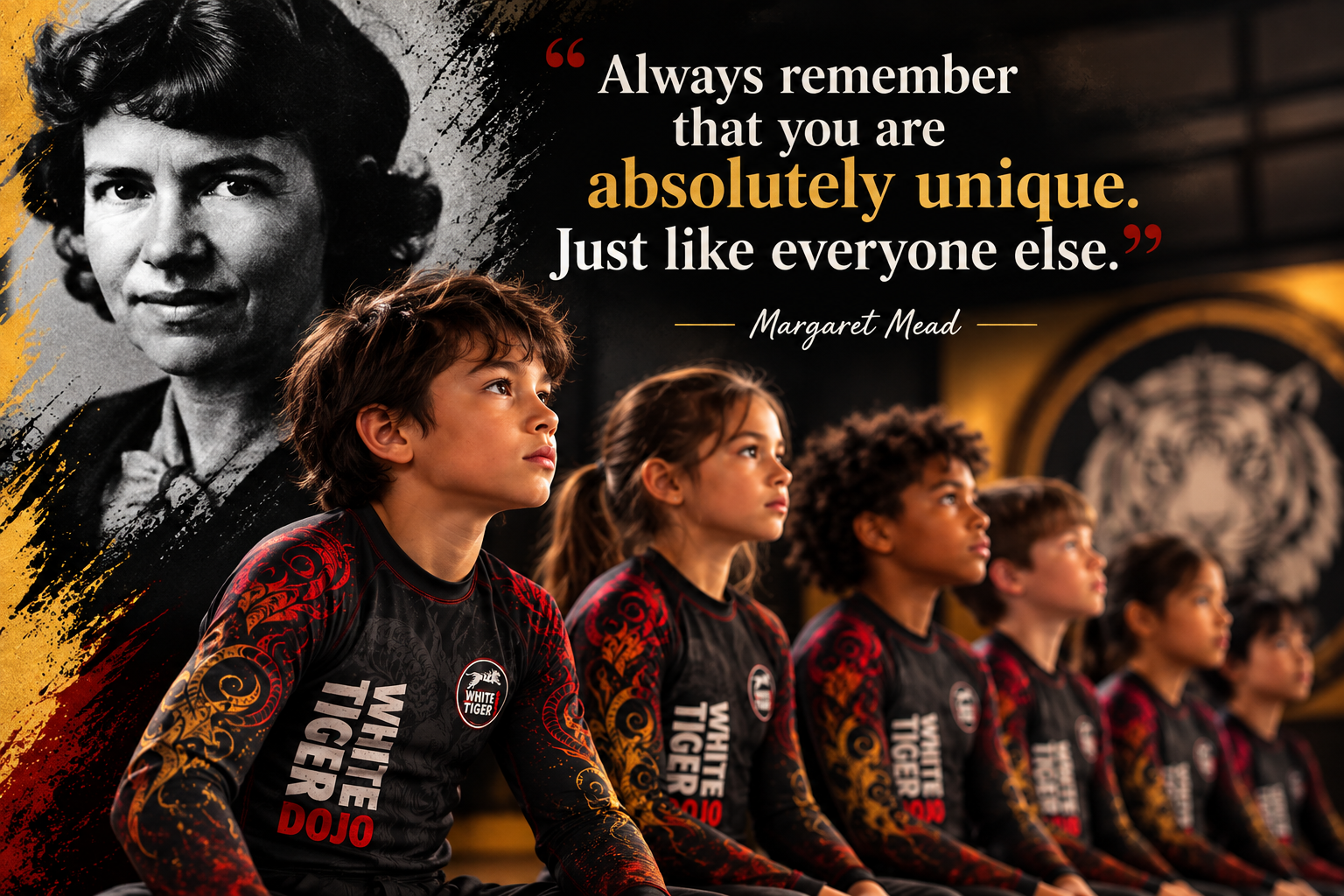
Standards only matter when they're consistently applied. At White Tiger Dojo, students learn that accountability, effort and critical thinking apply to everyone, including the instructor.

Read more
In With The New Year and Out With The Bad Habits

In With The New Year and Out With The Bad Habits

New Year's resolutions often focus on adding new goals, but lasting change may begin by understanding the habits we already have and removing the ones getting in our way.

Read more
Internal Struggle: Why Do Schools Group Test? And Why We Don't at WTD!

Internal Struggle: Why Do Schools Group Test? And Why We Don't at WTD!

Martial arts isn't about becoming better than the student standing next to you. True self-mastery means learning from others while continually working to become a better version of yourself.

Read more
Let Go Often: How Do I Teach My Child Self-Actualization?

Let Go Often: How Do I Teach My Child Self-Actualization?

Children become independent when parents and teachers gradually give them opportunities to struggle, solve problems and take responsibility for themselves. The goal is knowing when to guide them and when to let go.

Read more
Lord of the WiFis: Attack of the Couch Slouch: How Do I Teach My Child Self-Regulation?

Lord of the WiFis: Attack of the Couch Slouch: How Do I Teach My Child Self-Regulation?

Technology isn't the enemy. The challenge is teaching children how to use screens without allowing screens to control their time, sleep, movement and relationships.

Read more
Love: What Makes White Tiger Dojo So Different?

Love: What Makes White Tiger Dojo So Different?

Martial arts may teach students how to handle conflict, but meaningful training also requires trust, empathy and cooperation. That's where some of the strongest relationships in the dojo begin.

Read more
Martial Music

Martial Music

Music and martial arts share more than you might expect. Both require timing, rhythm, listening, adaptation and the ability to find structure within controlled chaos.

Read more
Mirror, Mirror: Will My Child Learn Teamwork at White Tiger Dojo?

Mirror, Mirror: Will My Child Learn Teamwork at White Tiger Dojo?

Good martial arts partners don't simply help each other succeed. They learn how to cooperate, resist, challenge and trust one another while taking responsibility for each other's safety.

Read more
New Year New Leaf: Will Training at White Tiger Dojo Promote Good Habits?

New Year New Leaf: Will Training at White Tiger Dojo Promote Good Habits?

Changing a bad habit doesn't happen overnight. Martial arts gives children repeated opportunities to practice discipline, self-control and the ability to keep going when change becomes difficult.

Read more
Overcoming Overindulgence

Overcoming Overindulgence

When a child struggled to step away from a new video game, his parents created clear boundaries and a path toward greater freedom. What happened next became a lesson in self-control, responsibility and trust.

Read more
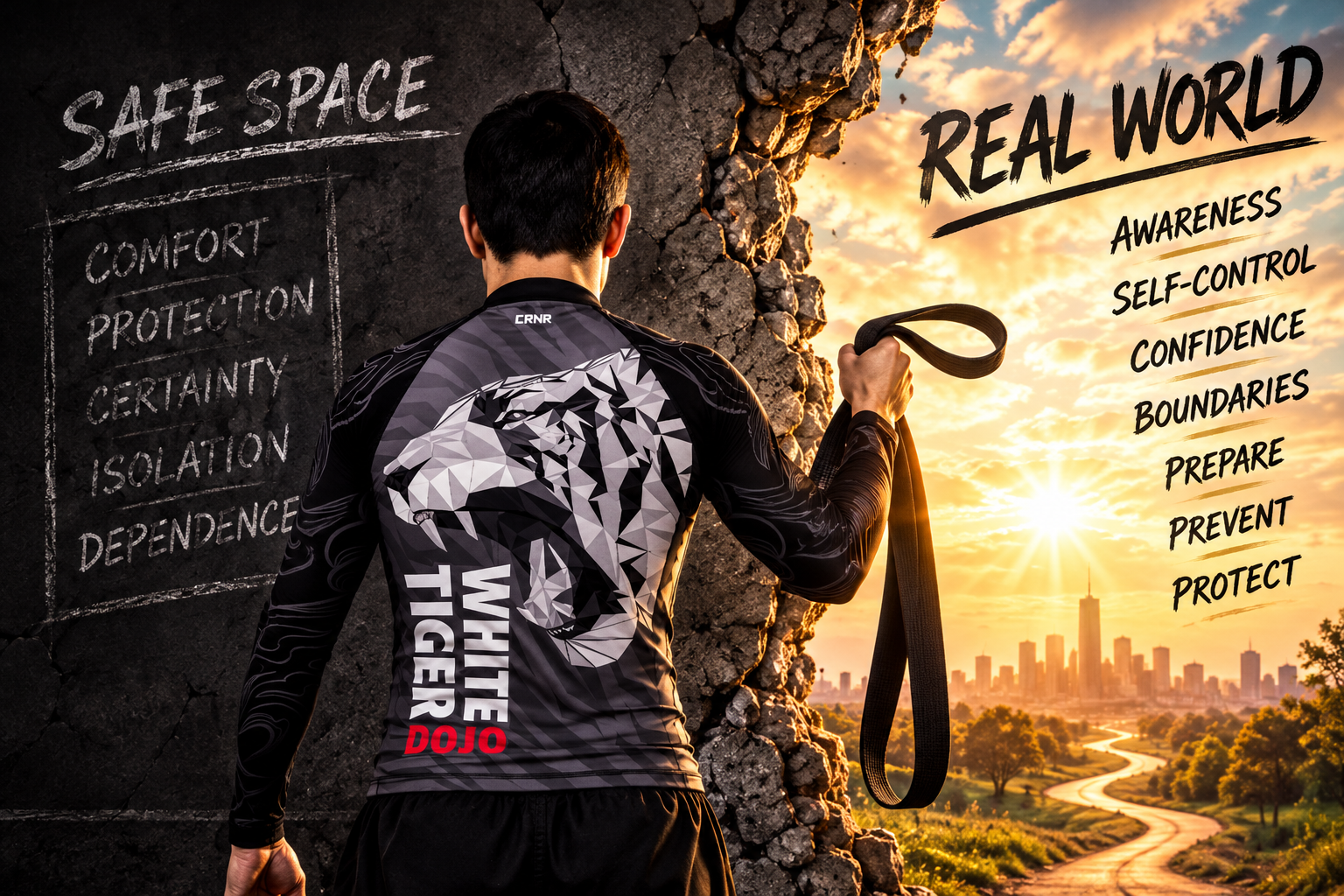
Safe Space. Dangerous World.

Safe Space. Dangerous World.

Keeping children safe isn't about teaching them to fear the world. It's about helping them develop boundaries, awareness and the judgment to recognize changing levels of risk.

Read more
Shutting Down: Conflict Avoidance

Shutting Down: Conflict Avoidance

When children shut down during a difficult task, the problem may not be ability. Helping them feel safe enough to struggle, ask questions and seek help can build confidence and independence.

Read more
Special

Special

Every student processes information and movement differently. Good teaching begins by discovering how that particular child learns, where they struggle and what abilities may be waiting to emerge.

Read more
Stand Up Straight and Speak Up!

Stand Up Straight and Speak Up!

Self-defense begins long before a punch or kick. Teaching children to stand confidently, speak clearly and communicate personal boundaries can give them more options when conflict begins.

Read more
Sweat the Small Stuff

Sweat the Small Stuff

Big changes often begin with small actions. Nearly thirty years of martial arts teaching have shown me how respect, discipline, failure and perseverance accumulate into something much larger.

Read more
The Equality of Unfairness

The Equality of Unfairness

Every child has different strengths, weaknesses and challenges. Treating children fairly doesn't mean treating them identically. Good teaching begins by understanding the individual.

Read more
The Gatekeeper: Would You Fail a Four-Year-Old?

The Gatekeeper: Would You Fail a Four-Year-Old?

Would you fail a four-year-old? I would. Not to punish a child, but to teach something far more important than earning their next rank: how to handle failure, respect boundaries, accept "no," and develop the resilience necessary to succeed in life.

Read more
The Gift of Failure

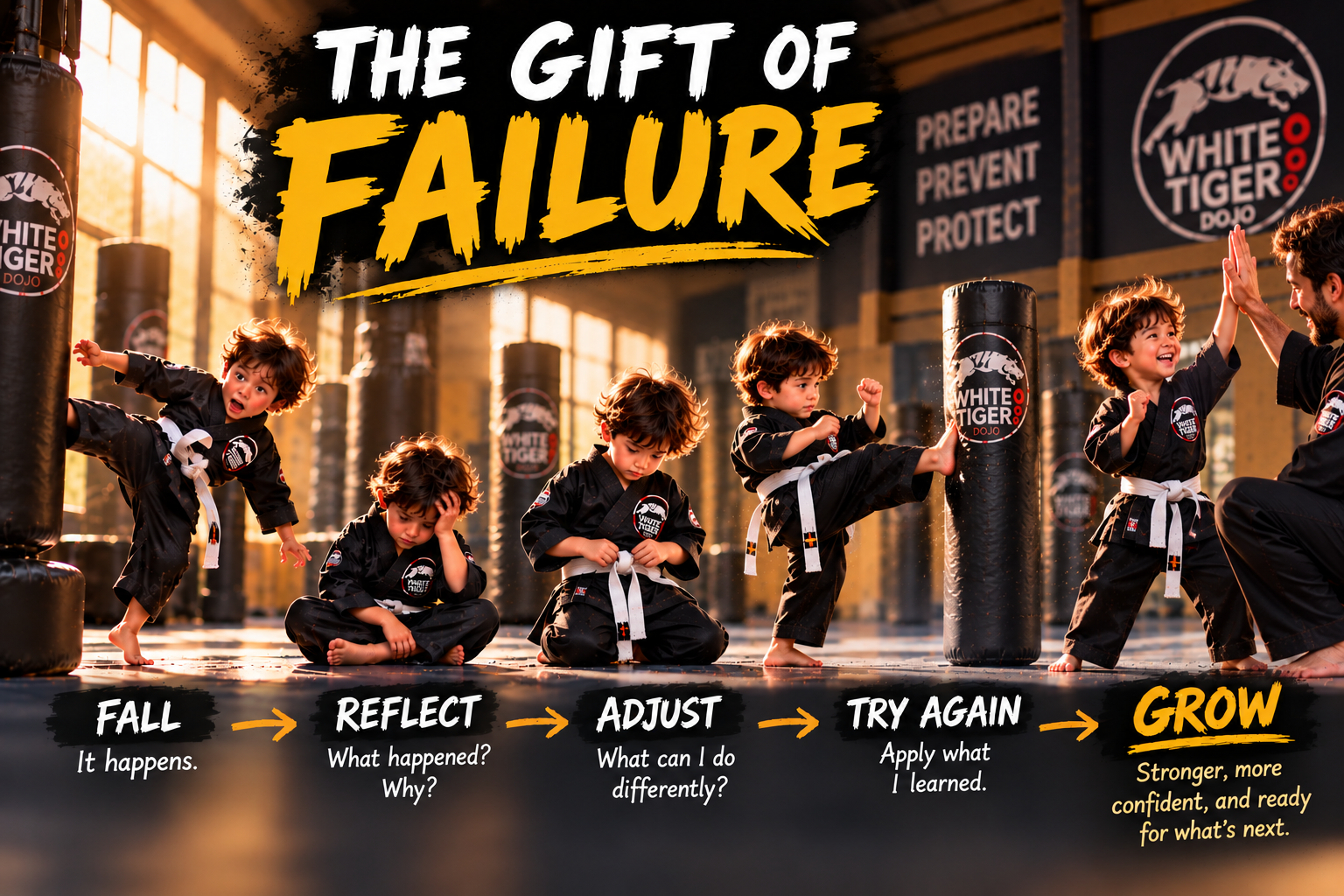
The Gift of Failure

Failure doesn't have to undermine a child's confidence. When children experience manageable setbacks and learn what to do next, mistakes can become feedback that builds resilience, responsibility and self-discipline.

Read more
The Great Enabling

The Great Enabling

Helping children doesn't always mean removing obstacles from their path. Manageable struggle, frustration and failure can help kids develop responsibility, resilience and the ability to solve problems independently.

Read more
The Immediate Gratification Trap

The Immediate Gratification Trap

Children live in a world where entertainment, information and rewards can arrive instantly. Learning to wait, work and persevere helps them develop self-control and discover the satisfaction of earning something difficult.

Read more
The Masks Of Approval

The Masks Of Approval

Seeking approval is natural, but constantly changing ourselves to earn it can undermine confidence. Children need to learn how to accept feedback without allowing someone else's approval to define who they are.

Read more
The Monster Inside Us: Understanding Violence and Self-Control

The Monster Inside Us: Understanding Violence and Self-Control

We all have a monster lurking beneath the surface. The question isn't whether it exists, but whether we're willing to confront it. Understanding violence begins with understanding ourselves, our insecurities, and our relationship with reality.

Read more
The Nuclear Option: Why Every Child Needs to Know When to Ask for Help

The Nuclear Option: Why Every Child Needs to Know When to Ask for Help

Children aren't safe simply because someone tells them they are. Real safety comes from awareness, the confidence to establish boundaries, and knowing when a problem requires the help of parents, teachers, or other trusted adults.

Read more
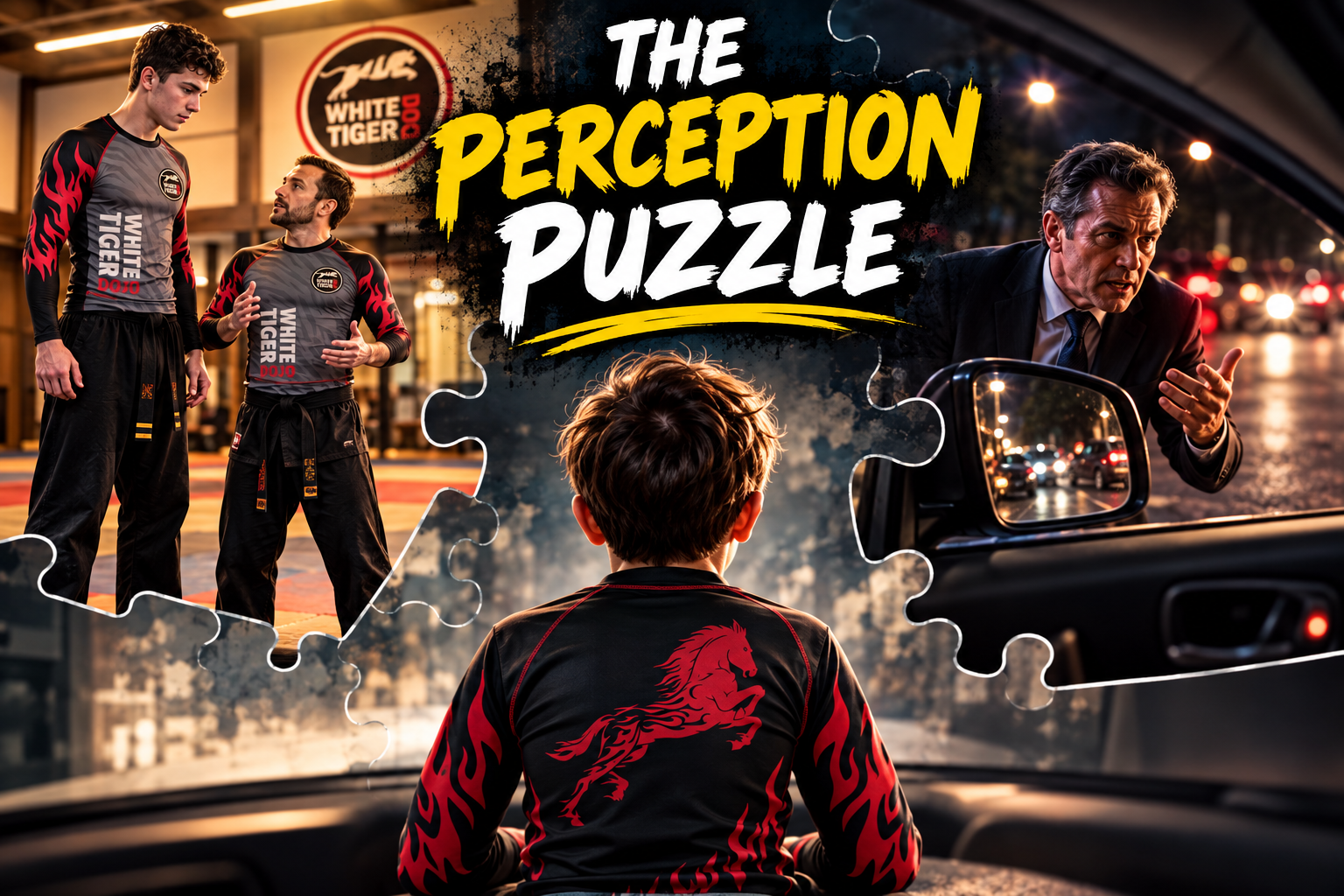
The Perception Puzzle

The Perception Puzzle

We don't simply see the world as it is. Our experiences, assumptions and perspectives influence what we notice. Martial arts can teach students to challenge those perceptions and make better decisions.

Read more
The Richness of the Mundane

The Richness of the Mundane

When extraordinary experiences become ordinary, children can lose appreciation for everyday life. Sometimes less gives kids the space to discover gratitude, happiness and enjoyment for themselves.

Read more
The ZIP Code Trap: How Wi-Fi Slipped Under the Wire

The ZIP Code Trap: How Wi-Fi Slipped Under the Wire

Parents once relied on neighborhoods and schools to shape their children's environment. Smartphones changed those boundaries, making digital awareness and self-control essential skills.

Read more
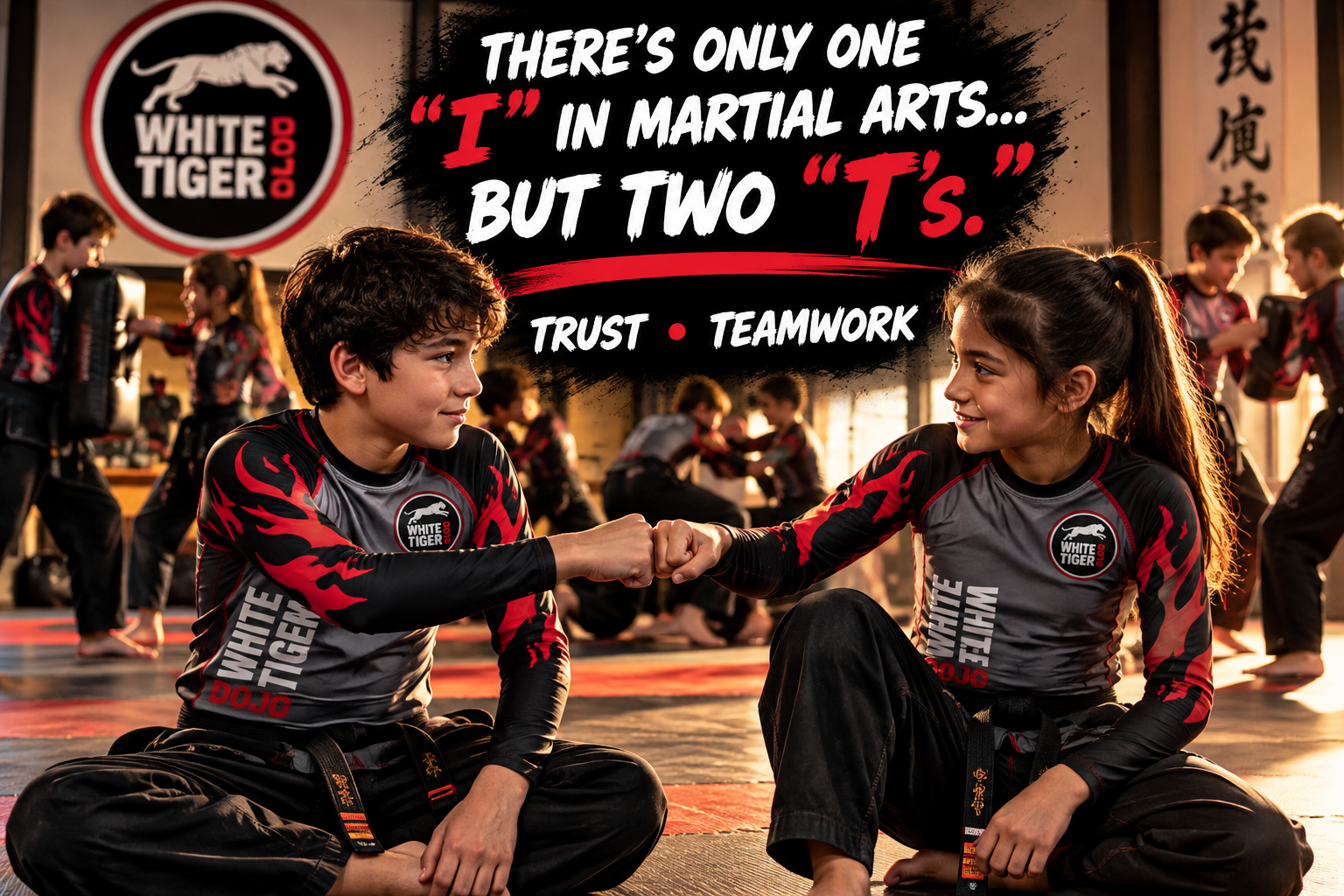
There’s Only One “I” In Martial Arts, but Two “T’s”

There’s Only One “I” In Martial Arts, but Two “T’s”

Martial arts may measure individual progress, but no student truly trains alone. Partners, teachers, trust and teamwork help every student challenge themselves and become better.

Read more
Thoughts are People Too

Thoughts are People Too

Children need boundaries with other people, but they also need to understand the thoughts inside their own heads. Self-awareness can help them decide which thoughts deserve attention and which should not control their choices.

Read more
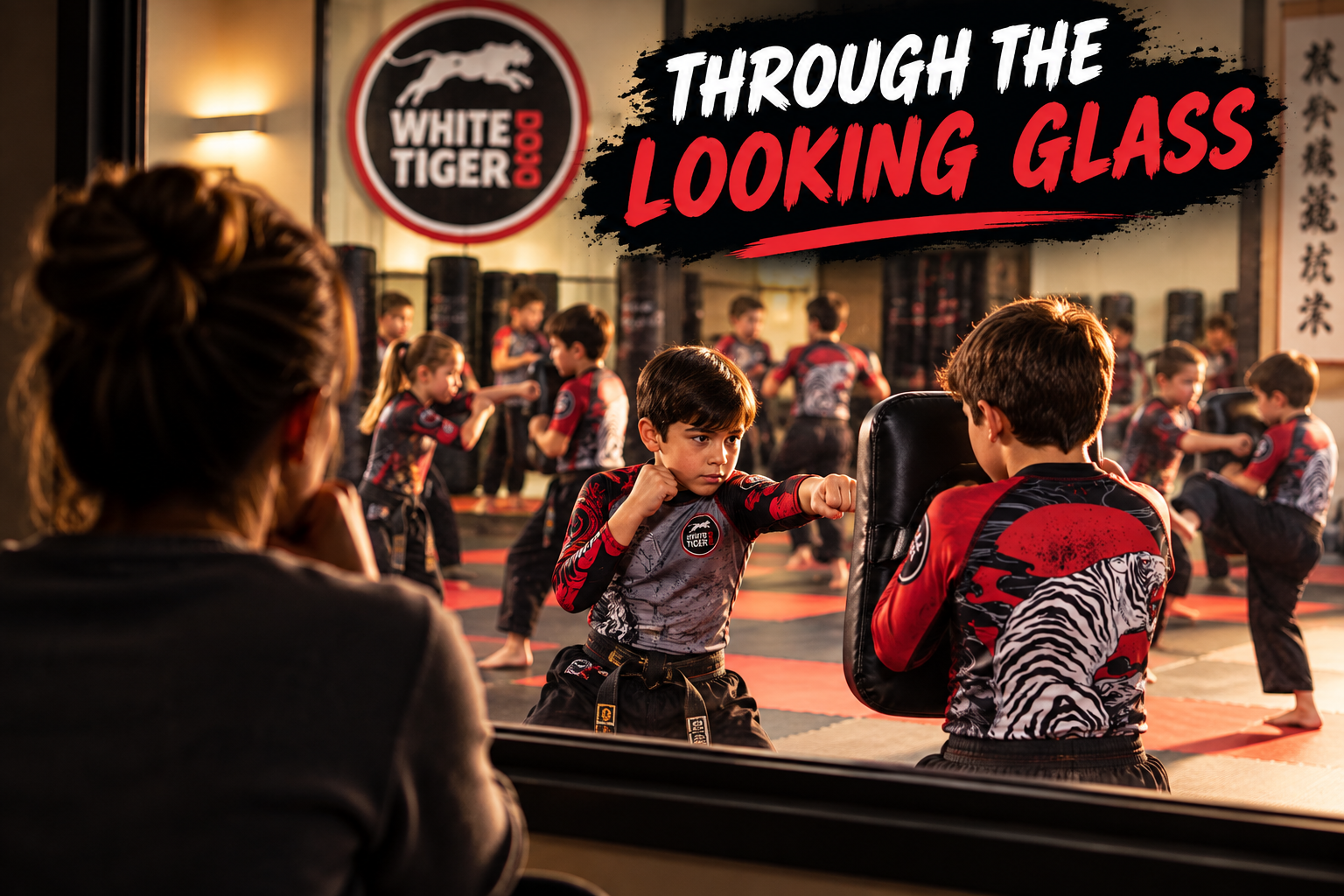
Through The Looking Glass

Through The Looking Glass

What do children do when they think their parents aren't watching? Through the one-way mirror at White Tiger Dojo, parents can watch their kids struggle, problem-solve and gradually develop confidence, self-control and independence.

Read more
TMI

TMI

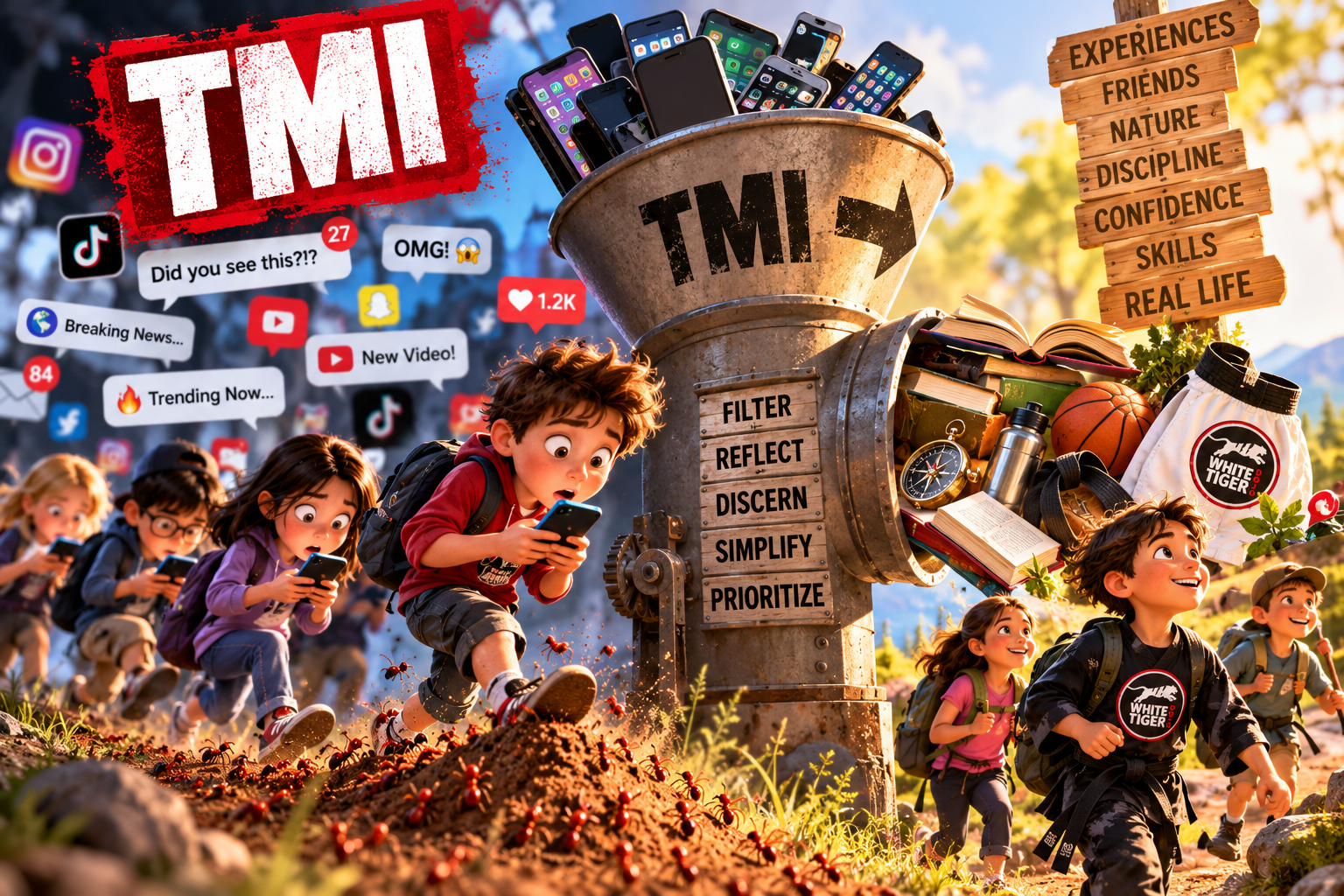
Children have access to more information than ever, but information isn't the same as experience. Kids still need opportunities to explore, fail, solve problems and gradually become independent.

Read more
Too Polite

Too Polite

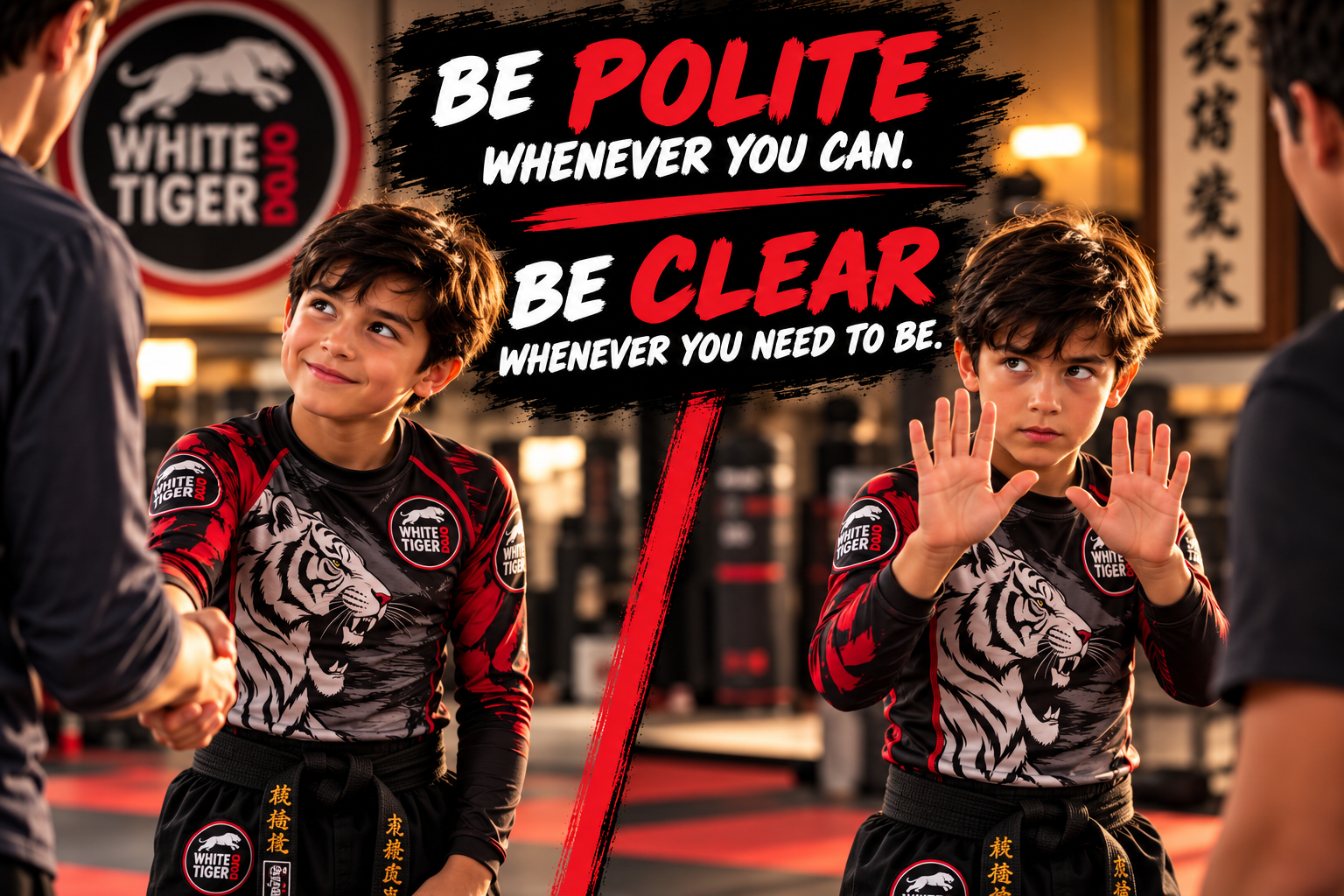
Being polite doesn't mean surrendering personal boundaries. The 3 Ps of distance can help children understand personal space, communicate clearly and become more assertive when something feels wrong.

Read more
Trust Me

Trust Me

Trust isn't something we can demand. It's something we develop through experience, consistency, and the willingness to rely on one another. In martial arts, as in life, meaningful progress often begins when we learn to trust.

Read more
Violence Prevention Overkill?

Violence Prevention Overkill?

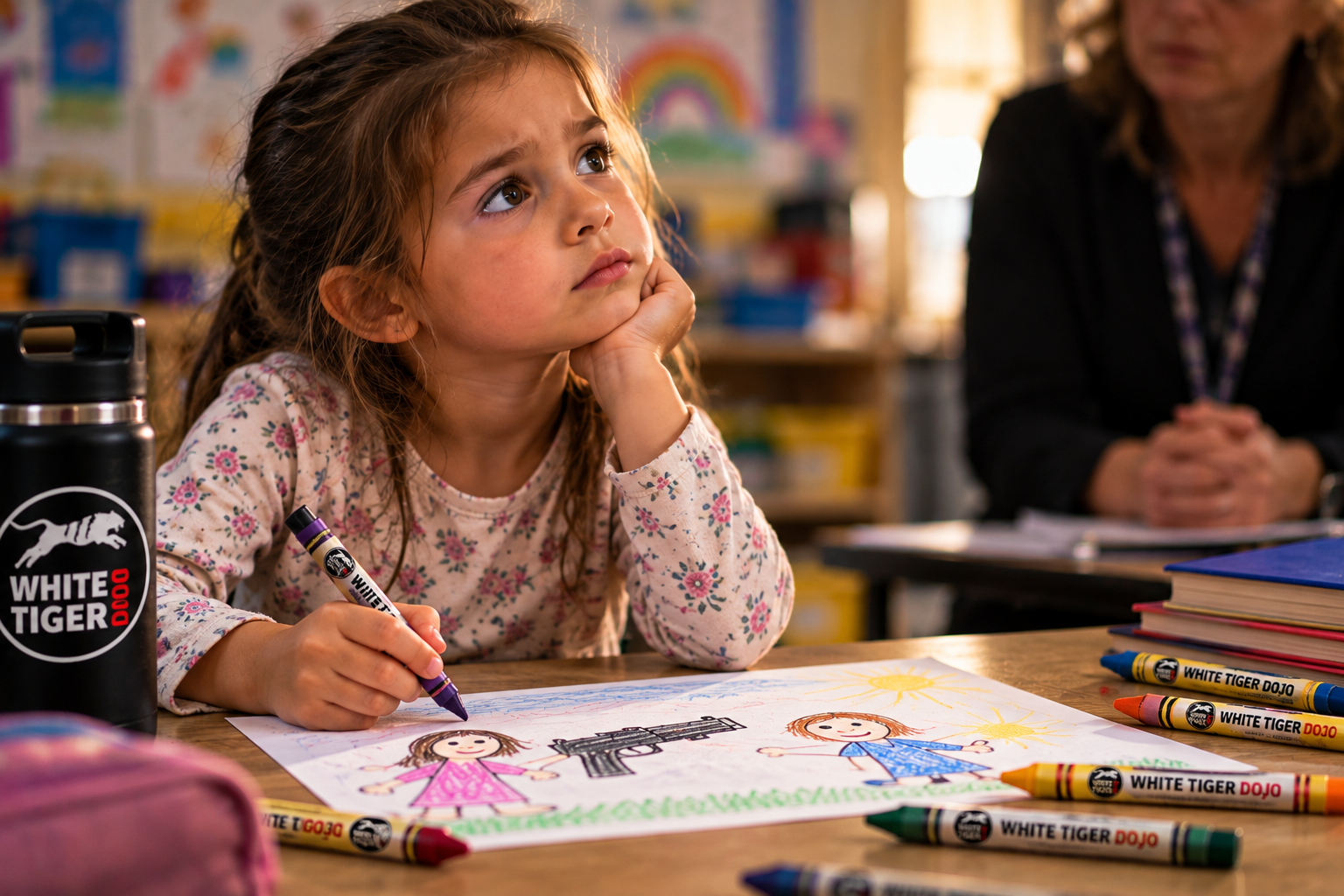
When a five-year-old was reportedly asked to sign a school safety contract, it raised an important question: How can educators protect children without misunderstanding their behavior or undermining their trust?

Read more
What To Do About “Me Too”? How Do We Teach Children to Speak Up and Protect Themselves?

What To Do About “Me Too”? How Do We Teach Children to Speak Up and Protect Themselves?

Inspired by the #MeToo movement, this reflection explores how teaching children boundaries, respect, self-control and self-defense can help them become more capable of protecting themselves and supporting others.

Read more
Who Owns You? The Relationship Between Self-Control and Self-Defense

Who Owns You? The Relationship Between Self-Control and Self-Defense

Can four walls and a sign guarantee our safety? Discover why self-control, awareness and the courage to establish boundaries are essential to self-protection.

Read more
Who Teaches the Teacher? The Importance of Never Becoming Complacent

Who Teaches the Teacher? The Importance of Never Becoming Complacent

After 30 years of martial arts study, one lesson remains constant: never become complacent. A firsthand account of challenging my skills alongside law enforcement professionals.

Read more
Why You Should Train at White Tiger Dojo

Why You Should Train at White Tiger Dojo

Martial arts is about more than learning to fight. Discover how White Tiger Dojo helps students develop the confidence, discipline, and focus they carry into everyday life.

Read more
You Never Can Tell: What Bruce Springsteen Teaches Us About Trust

You Never Can Tell: What Bruce Springsteen Teaches Us About Trust

Bruce Springsteen and the E Street Band show what happens when talented people trust one another. It's a lesson that applies just as powerfully to martial arts.

Read more