
The Equality of Unfairness
Every child has different strengths, weaknesses and challenges. Treating children fairly doesn't mean treating them identically. Good teaching begins by understanding the individual.
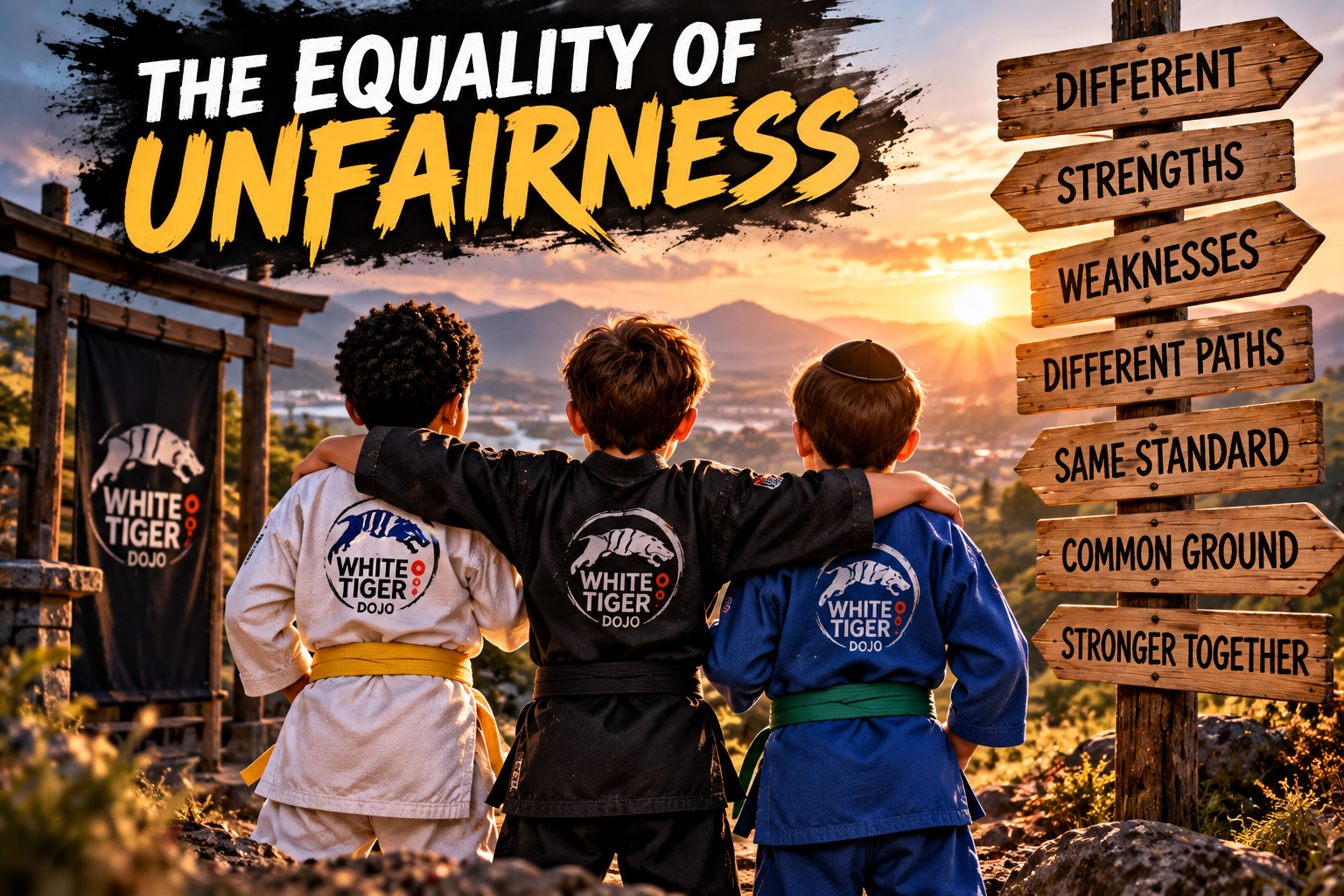
BERKELEY HEIGHTS, NJ: Growing up, the only time I ever heard that my friends and I were different was usually when someone was trying to start a problem.
I'm short, my friend Kevin is African-American, and my friend David is half-Jewish and half-Catholic.
Growing up, we were a delectable trio for some school-age malcontent.
By the time I entered fourth grade, I had already learned that life wasn't always fair. I also learned something else:
I might not be interested in conflict, but conflict could still be interested in me.
No one gave us a break.
In fact, each of us was sought out by an angry or frustrated party looking to improve their social standing at one point or another. Sometimes they even tried to drive us apart with rumors.
But we learned to stick together.
We also weren't always 100% innocent.
That's an important part of the story too.
Children Need Opportunities to Learn How to Handle Conflict
There was one important difference in the way we grew up.
As a group of peers, we were often given the opportunity to settle our own grievances.
Being the smaller of the three, I mastered the art of gathering people to my cause rather quickly.
Over time, disagreements were settled and people who had once been at odds sometimes ended up sharing the same circle of friends.
We figured some of it out ourselves.
That matters.
It doesn't mean adults should ignore bullying, violence, threats, harassment or situations children aren't equipped to handle safely.
Children need adults.
But children also need opportunities to develop the judgment to recognize which problems they can solve themselves, which problems require help, and when the difference matters.
If adults solve every disagreement for them, when do children practice solving disagreements?
Protecting Children Shouldn't Mean Removing Every Conflict
Somewhere along the way, I think we became increasingly uncomfortable allowing children to experience the ordinary messiness of social interaction.
The intention is understandable.
We want to protect them.
But protection shouldn't mean eliminating every disagreement, insult, frustration or uncomfortable interaction before a child has an opportunity to respond.
Childhood is messy.
Friendships are messy.
People misunderstand each other.
Feelings get hurt.
Children make bad decisions.
Sometimes they're treated unfairly.
And sometimes, uncomfortable as it may be for parents to admit, our own child is the one behaving badly.
Some days you're the hero.
Other days you're asleep at the wheel.
That's called being human.
Conflict Can Teach Children Judgment and Responsibility
Through positive peer pressure and calm, thoughtful guidance from good teachers and parents, children can learn how to handle the social rigors of growing up.
Better to begin learning those lessons when the stakes are relatively small.
How do I respond when someone insults me?
Should I ignore this?
Should I speak up?
Can I solve this myself?
Do I need help?
Am I actually the person causing the problem?
Those are judgment calls.
And judgment requires practice.
At White Tiger Dojo, we often approach conflict through three ideas:
Prepare. Prevent. Protect.
Prepare by developing awareness.
Prevent by understanding what's happening, confirming intent when possible, communicating clearly and avoiding unnecessary conflict.
Protect by taking appropriate action when avoidance is no longer enough.
The goal isn't to leave a child alone with every problem.
The goal is to gradually help the child become capable of participating in the solution.
Life Isn't Fair, and Equality Doesn't Mean Sameness
While studying philosophy at Drew University, I encountered Thomas Hobbes' Leviathan.
Hobbes makes an interesting argument about human equality. Even when people differ considerably in strength or ability, those differences don't necessarily make one person completely powerless against another.
That idea stuck with me.
Because people aren't equal in the neat and tidy sense that everyone possesses the same body, mind, abilities, circumstances or advantages.
They don't.
Some people are bigger.
Some are faster.
Some are stronger.
Some communicate better.
Some learn movement quickly.
Some remain calm under pressure.
Some notice things everyone else misses.
Equality doesn't require pretending those differences don't exist.
In fact, understanding those differences may be exactly what allows us to work with them.
Every Student Has Strengths and Weaknesses
My objective isn't to teach students that conflict is equal.
It isn't.
My objective is to help them understand themselves well enough that they can work with whatever situation is actually in front of them.
Through the study of conflict, students begin to recognize their strengths and weaknesses.
And that's the real equalizer.
It's why I tell my students:
“I teach you all the same way: differently.”
Every student brings something different onto the mat.
One student may be strong but slow.
Another may be small but quick.
One may remember every detail of a kata but struggle to improvise.
Another may struggle with forms but instinctively understand distance and timing.
What appears to be a disadvantage in one situation may become an advantage in another.
It depends on who's standing across from you and what problem you're trying to solve.
Treating Every Child Fairly Doesn't Mean Treating Every Child Identically
This is where I think we sometimes confuse equality with sameness.
If I taught every student exactly the same way simply because I wanted to be “fair,” I wouldn't actually be treating them fairly.
I'd be ignoring who they are.
One student may need encouragement.
Another needs to be challenged.
One needs more repetition.
Another needs greater resistance.
One needs help finding their voice.
Another needs to learn when to stop using theirs.
The standard can remain the same while the path toward reaching it is different.
That's not unfairness.
That's teaching.
Understanding Our Differences Can Actually Bring Us Together
In the end, conflict often becomes worse when differences become reasons to distance ourselves from one another.
Kevin, David and I were certainly different.
But those differences weren't the most important thing about us.
We were friends.
When someone tried to use those differences to separate us, we learned to close ranks instead.
And perhaps that's one of the more useful things conflict taught me.
Understanding our differences doesn't require us to pretend they don't exist.
It requires us to understand where they matter, where they don't, and where we still share common ground.
Because sometimes the best way to reduce conflict isn't to eliminate our differences.
It's to stop allowing those differences to keep us apart.