
The Great Enabling
Helping children doesn't always mean removing obstacles from their path. Manageable struggle, frustration and failure can help kids develop responsibility, resilience and the ability to solve problems independently.
BERKELEY HEIGHTS, NJ: I've been teaching four-year-olds long enough that some of them are now married and expecting children of their own.
Within that same time frame, I've seen plenty of teaching methods and parenting methods go in and out of favor.
As an educator, I can't say that we've necessarily gotten better at teaching children to become self-sufficient.
That isn't to say every school or every parent is failing today's children.
It's simply a commentary on the idea that "less struggle" isn't necessarily the best goal we can have for them.
Children Need Some Struggle to Become Self-Sufficient
From time to time, parents send me articles about parenting and education.
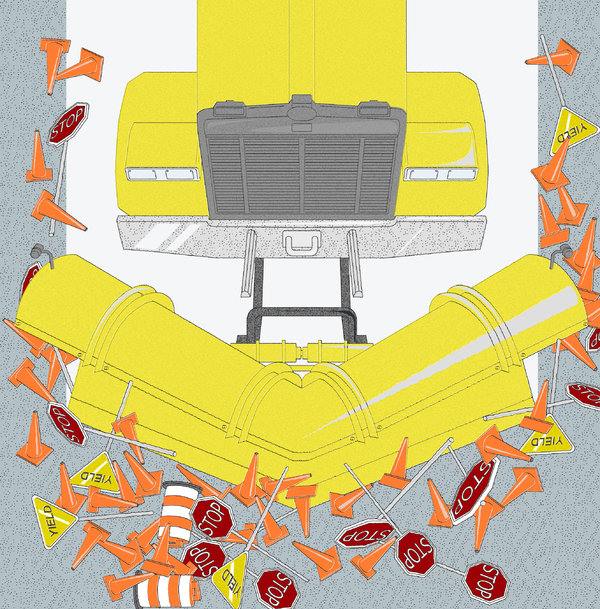
Recently, one came my way about what has been called "snowplow parenting," the tendency to clear obstacles out of a child's path before the child has an opportunity to encounter them.
It reminded me of the first time I encountered this issue on the mat, approximately fifteen years ago.
A kindergartner was approaching test time when his mother came up to me, clearly worried.
"What if he fails? I mean, would you fail kids this young?"
I told her that I'd been preparing him for a while and believed he was ready.
He knew the material required to pass.
But I also warned her:
Anything can happen on test day.
I could see the concern on her face, so I asked her a few questions of my own.
"What if he never fails until he's eighteen years old?"
"What if he leaves home having never been told no?"
"What if he's never had to solve a difficult problem?"
"What if he's never had to be responsible for himself?"
The stakes were pretty small that day.
He was a kindergartner taking a martial arts test.
And perhaps that's exactly why it was such a good place to begin learning.
Failure Is Easier to Learn When the Stakes Are Small
He ended up passing his test.
To this day, I still know the family and visit his mother's business from time to time.
But that conversation became a defining moment for both of us.
The question wasn't really whether her son would pass that particular test.
The larger question was:
What are we preparing children to do when eventually they don't?
Because sooner or later, something isn't going to work.
They'll forget something.
Lose something.
Make a poor decision.
Get rejected.
Fail a test.
Lose a competition.
Hear the word "no."
Encounter a problem we aren't standing beside them to solve.
If the first meaningful failure arrives after we've spent eighteen years removing every obstacle from their path, we haven't necessarily protected them.
We may simply have postponed the lesson until the consequences became much larger.
Helping a Child Isn't the Same as Removing Every Obstacle
There's an important distinction here.
Allowing children to struggle doesn't mean refusing to help them.
Good parents help.
Good teachers help.
Good coaches help.
The question is what kind of help we're providing.
Sometimes helping means explaining.
Sometimes it means demonstrating.
Sometimes it means encouraging.
Sometimes it means allowing another attempt.
And sometimes helping means standing nearby while a child struggles with something we could easily do for them.
That's difficult.
Solving the problem ourselves is often faster.
But efficiency isn't always the objective.
Capability is.
The Goal Is Gradually Needing Us Less
When children are very young, we necessarily do almost everything for them.
Then, little by little, the responsibility begins changing hands.
We demonstrate.
We guide.
We supervise.
We step back.
Eventually, they do it themselves.
That's how self-sufficiency develops.
Not because children suddenly become independent at eighteen, but because they've been practicing independence in increasingly meaningful ways throughout childhood.
That requires some struggle.
It requires some frustration.
And yes, occasionally, it requires some failure.
Don't Grease the Track Too Much
The desire to grease the track for a student or child can be incredibly strong.
We love them.
We want them to succeed.
We don't want to watch them struggle unnecessarily.
There's nothing wrong with that instinct.
But there's a difference between preparing the track and removing every obstacle from it.
Our children won't always have someone running ahead of them clearing the way.
Eventually, they're going to encounter something we can't remove.
So perhaps the goal isn't to make their path perfectly smooth.
It's to gradually teach them how to navigate whatever happens to be on it.
Because if we spend too much time greasing the track for them, there may eventually be an unintended consequence.
We might just launch them right off of it.