
The ZIP Code Trap: How Wi-Fi Slipped Under the Wire
Parents once relied on neighborhoods and schools to shape their children's environment. Smartphones changed those boundaries, making digital awareness and self-control essential skills.
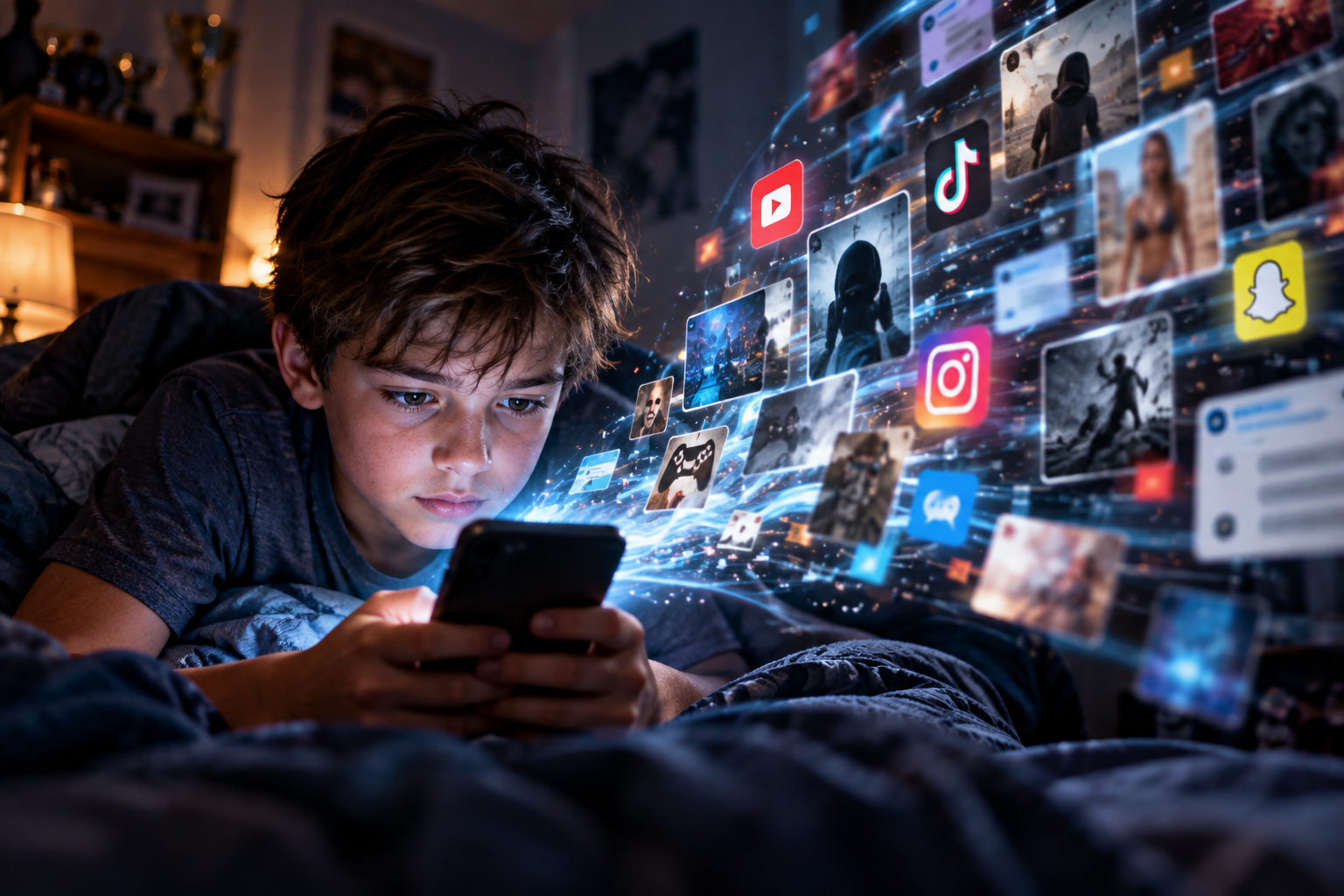
BERKELEY HEIGHTS, NJ: When I was a kid, we moved around a lot as my father left his medical residency, joined a practice and eventually owned his own practice. The four of us lived in a two-bedroom apartment, then a three-bedroom apartment and finally a house by the time I was eight years old.
Although I didn't know it at the time, I later learned that this was the name of the game when trying to raise a happy, healthy and safe family.
My parents understood that certain ZIP codes offered opportunities, educational standards, community values and levels of safety that others did not.
It made sense then, and it still makes sense now...to a certain extent.
How Parents Have Traditionally Protected Their Children
Every generation of parents tries to improve the lives of the next generation.
Families tend to gravitate toward other like-minded families. Parents choose neighborhoods, schools and communities based on the environments they want their children to experience.
The "system" worked, at least when it came to having some control over the people, places and influences children encountered in their immediate surroundings.
But something changed.
Smartphones Changed the Boundaries of Childhood
In 2007, the smartphone began its charge full steam ahead.
Right past the ZIP code.
Right past the schoolyard.
Right past the front yard.
And into the naive and developing minds of young children.
Wi-Fi slipped under the wire.
All of the negative behaviors and influences that parents had tried to shield their children from by choosing certain communities could now appear in the palms of their children's hands.
Poor behavior, propaganda, profanity, violence, sexually explicit material and countless other forms of content were suddenly much easier to encounter.
Children could stumble upon some of it almost as easily as they could deliberately search for it.
The physical boundaries parents had worked so hard to establish no longer determined the boundaries of their children's experiences.
Protecting Kids Online Requires More Than Restrictions
Like most things in life that can become harmful, simply hiding Pandora's box from children can sometimes make them more curious about opening it.
That doesn't mean children should have unrestricted access to everything online.
Age-appropriate limits, supervision and safeguards are important.
But restrictions alone cannot teach children how to make responsible decisions when we're not standing beside them.
Eventually, they need to understand what they're looking at, who created it, why it was created and how it might influence their behavior.
We cannot teach children to navigate the digital world simply by pretending that world doesn't exist.
Teaching Children Digital Awareness and Self-Control
When we teach a child about the power of a smartphone, we should also teach them about the people behind it.
People create the content.
People develop the technology.
People decide what to share.
People design the platforms that compete for our attention.
And people make decisions about how those tools are used.
Understanding the human effort and choices behind a smartphone helps remove some of the mystery surrounding this seemingly magical device.
It also gives children an opportunity to recognize something important:
They have choices, too.
They can learn to question what they see.
They can learn to recognize when something is inappropriate, misleading or manipulative.
They can learn when to put the phone down.
And they can learn that just because something is available doesn't mean it deserves their attention.
Without understanding the human power that made the smartphone possible, I don't think we can fully empower children to recognize their own control over it.
We cannot protect children from everything, but we can teach them to protect themselves and rise to the challenge.