
Safe Space. Dangerous World.
Keeping children safe isn't about teaching them to fear the world. It's about helping them develop boundaries, awareness and the judgment to recognize changing levels of risk.
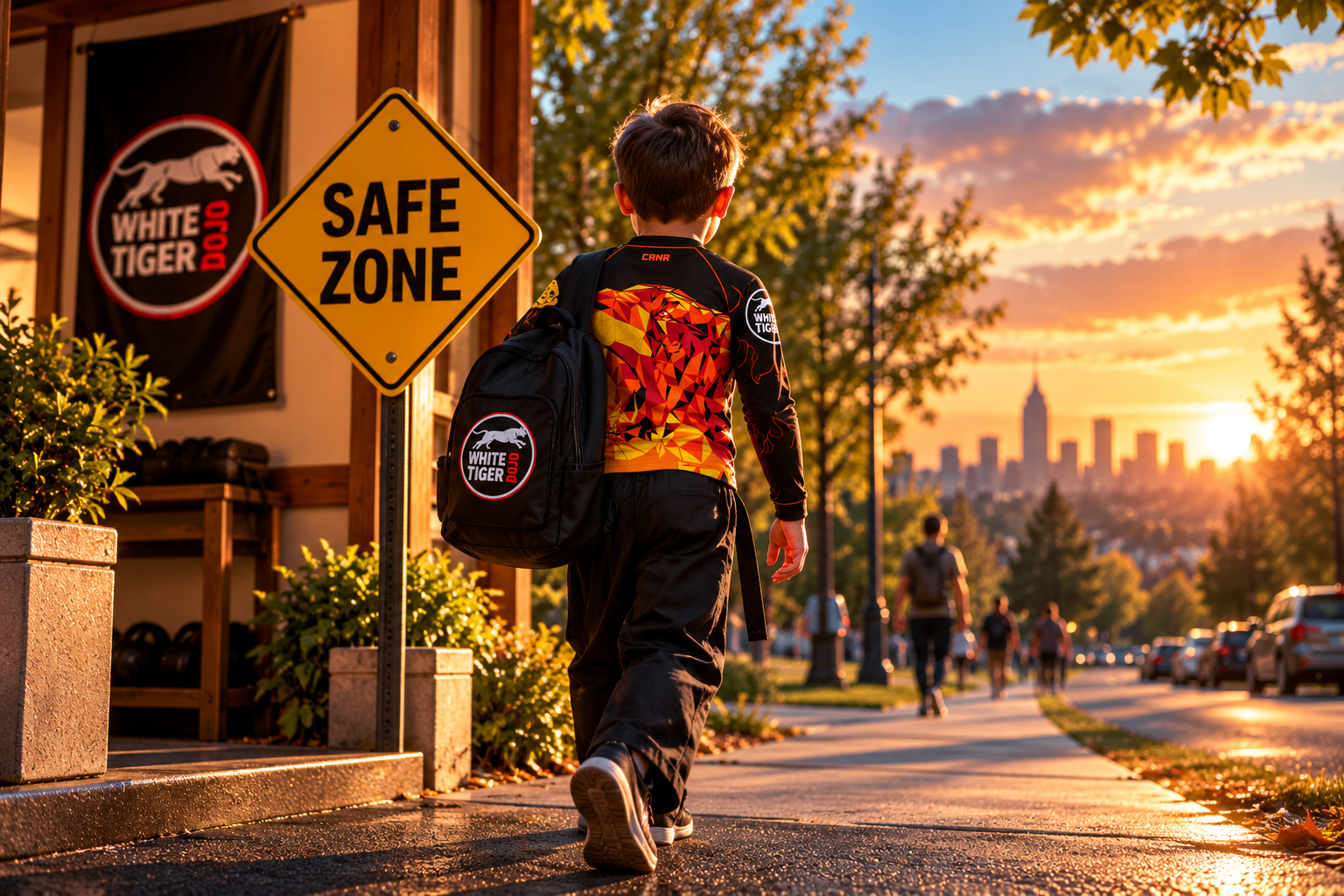
(The 1st of a Series)
BERKELEY HEIGHTS, NJ: One of the most difficult things about teaching self-defense is helping a student create a balance between physical and mental boundaries.
In order to understand boundaries, we need some awareness of what may lie beyond them.
Danger.
Risk.
Consequences.
At the same time, we need something worth protecting within those boundaries.
The people we love.
The things we value.
Ourselves.
Because discussions about safety can easily drift toward extremes, it's important to maintain a sense of perspective when trying to create a safer space in an unpredictable world.
Why Do We Think About Danger When Most of Us Feel Safe?
For many of us living in the United States, much of everyday life can feel remarkably safe.
We live in homes designed to protect us from the environment. We travel on established roads. We work and learn inside buildings. We have medicine, emergency services, laws and countless systems intended to make daily life safer.
So why talk about danger at all?
Why teach self-defense?
Why do we need boundaries if most of our lives are spent in places where we generally expect to be safe?
Because safe and completely free from danger are not the same thing.
Risk changes.
So should our awareness of it.
The Dangers Change, but Our Need for Awareness Doesn't
Human beings have always had to navigate threats.
Some come from the natural world.
Some come from circumstances.
And some come from other people.
The threats may change considerably depending upon where we are, what we're doing and who we're with, but our need to recognize and respond appropriately to them remains.
That's where perspective becomes important.
We don't need to walk through every ordinary situation terrified of what might happen.
But we shouldn't become so comfortable that we stop paying attention either.
Self-defense has to exist somewhere between those two extremes.
Children First Learn Boundaries From Adults
A child's earliest understanding of boundaries usually comes from the adults responsible for them.
“Don't touch that.”
“Stay where I can see you.”
“Don't run into the street.”
A young child doesn't necessarily understand all the reasoning behind those instructions.
Initially, they may comply simply because a large, trusted adult has established the boundary.
Eventually, however, we want them to understand why the boundary exists.
The goal isn't for a child to remain dependent upon someone else's warnings forever.
The goal is for them to gradually develop enough awareness and judgment to recognize appropriate boundaries for themselves.
Different Environments Require Different Levels of Awareness
This is something I teach through the idea of changing thresholds.
When we're sitting comfortably at home, our threshold for concern about immediate physical danger may be fairly low.
At school or work, our attention may shift toward different pressures.
Deadlines.
Responsibilities.
Social situations.
Performance.
Sometimes those pressures overlap.
You're running late for an appointment.
You still have thirty questions left on a test and only five minutes to answer them.
You're walking through a parking lot while distracted by something that happened at work.
Our environment changes.
Our priorities change.
And our level of awareness should be capable of changing with them.
Self-Defense Isn't About Being Afraid of Everything
That's an important distinction.
If I teach someone that danger is everywhere, I haven't necessarily made them safer.
I've potentially just made them afraid.
On the other hand, pretending that danger doesn't exist doesn't prepare them either.
The objective is not constant fear.
It's appropriate awareness.
Self-discipline helps us decide what deserves our attention and what doesn't.
Judgment helps us determine when something is merely uncomfortable and when something may actually be unsafe.
Experience helps us adjust those thresholds over time.
We Can't Make the World Perfectly Safe
Perhaps we can't create a perfectly “safe space.”
But we can create safer conditions within an unpredictable world.
We can establish boundaries.
We can develop awareness.
We can learn to recognize changing circumstances.
We can practice controlling our emotions when something makes us uncomfortable.
And we can develop enough self-discipline to prioritize our fears and anxieties without allowing either one to control us.
Once we begin establishing that foundation for ourselves, we can gradually widen the area in which we feel capable and confident.
It's much like watching a child explore their world.
At first, the boundaries are small and someone else creates them.
Then the child ventures a little farther.
They explore.
They learn.
They return.
And eventually, what once seemed like a dangerous world becomes territory they know how to navigate for themselves.