
There’s Only One “I” In Martial Arts, but Two “T’s”
Martial arts may measure individual progress, but no student truly trains alone. Partners, teachers, trust and teamwork help every student challenge themselves and become better.
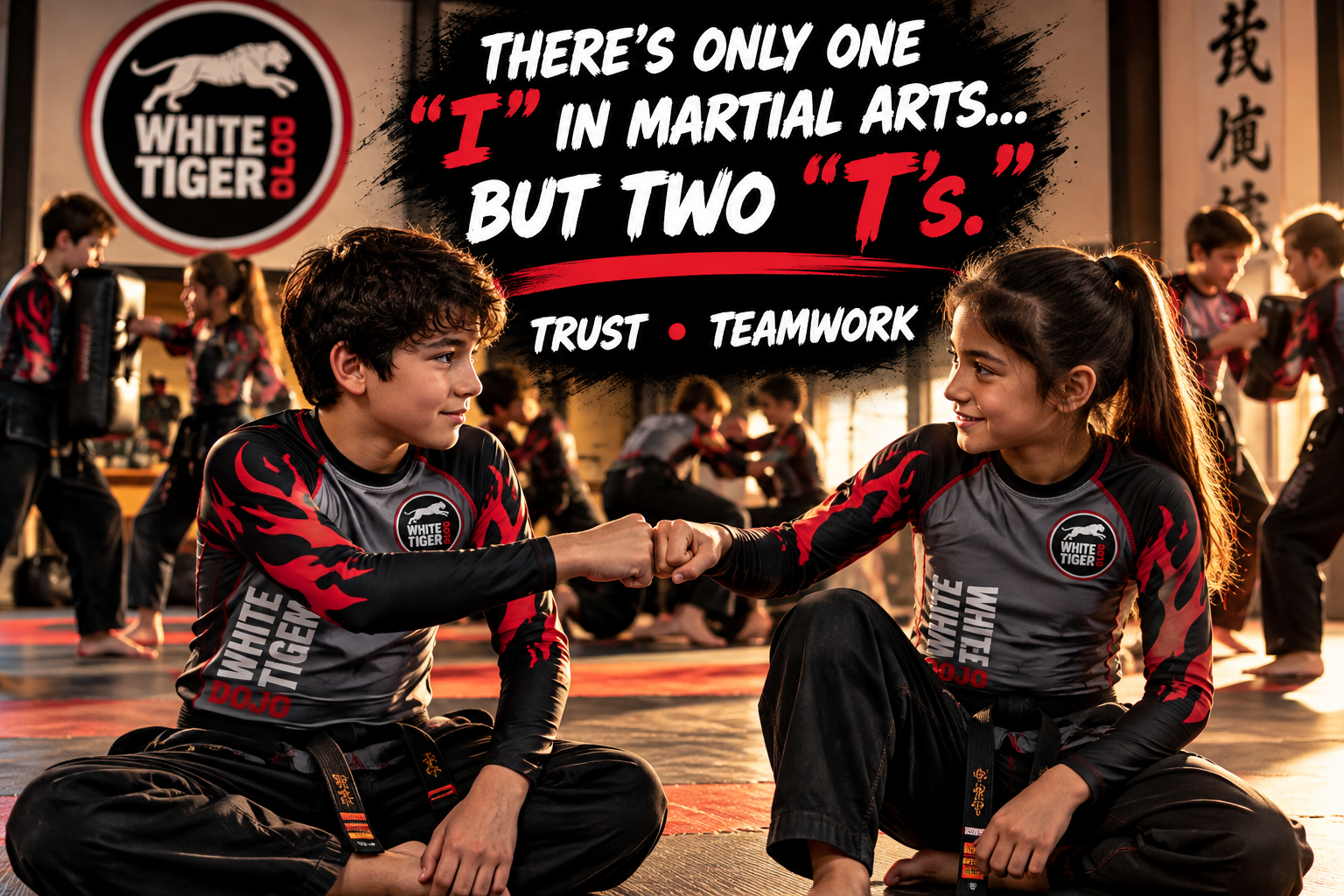
BERKELEY HEIGHTS, NJ: A number of people join martial arts because they don't feel particularly suited to traditional team sports.
And yet, I've never really thought of martial arts as something we do alone.
With today's 24/7/365 demands of many team sports, I find it difficult to compel my students to train more often than they can honestly commit.
I believe the study of martial arts is important.
But not at the expense of balance.
I understand why team sports require commitment.
You're part of a team.
But here's the question:
Who isn't part of a team?
Martial Arts May Be Individual, but You Don't Train Alone
My dojo is comprised of a latticework of personalities, ages, abilities, levels of athleticism and coordination.
There are no wasted parts.
Everyone is included.
No one is benched because they didn't perform well on a given day.
No one is cut because they didn't develop as quickly as someone else.
Every student is working toward their own success, even on their worst days.
But they're surrounded by other people doing exactly the same thing.
And that's where something interesting happens.
Your progress may belong to you, but you rarely achieve it entirely by yourself.
A Good Training Partner Helps You Become Better
Martial arts requires partners.
Someone has to hold the pad.
Someone has to throw the punch.
Someone has to resist.
Someone has to give you enough pressure to expose the mistake.
Someone has to trust you enough to let you practice the technique.
Someone has to challenge you without trying to hurt you.
And tomorrow, you're expected to return the favor.
That's teamwork.
A good partner isn't simply someone who allows you to succeed.
A good partner helps you discover where you still need to improve.
Everyone in the Dojo Has Something to Contribute
If I don't challenge myself as a teacher, I'm doing my students a disservice.
If my students aren't challenging themselves as individuals, then they're not bringing their best effort to their partners either.
That makes martial arts a cooperative experience.
It requires relationship building.
Honest dialogue.
Honest self-assessment.
Trust.
Patience.
Responsibility.
Sometimes encouragement.
Sometimes resistance.
And occasionally someone who looks at you and says:
"Nope. Try that again."
No one walks away unchanged.
And everyone has something to give.
Your Individual Progress Can Make the Whole Team Better
One of the interesting things about martial arts is that your partner's improvement eventually becomes your problem.
That's a good thing.
If my partner becomes faster, I have to improve my timing.
If my partner becomes stronger, I have to improve my technique.
If my partner becomes more skilled, I have to become more adaptable.
Then my improvement gives my partner a new problem to solve.
We make each other better.
That's why the student standing across from you isn't simply an obstacle between you and the technique.
They're part of how you learn it.
Martial Arts Teaches Trust and Teamwork
Rank may be individual.
Progress may happen at different speeds.
The challenge may belong to you.
But none of that means you're alone.
Teachers need students.
Students need teachers.
Beginners learn from advanced students.
Advanced students often learn something unexpected from beginners.
And everyone needs good partners.
So when you or your child signs up for martial arts, remember:
There's only one "I" in martial arts.
But there are twice as many "T's."
And around here, they stand for:
TRUST.
and
TEAMWORK.