
Violence Prevention Overkill?
When a five-year-old was reportedly asked to sign a school safety contract, it raised an important question: How can educators protect children without misunderstanding their behavior or undermining their trust?
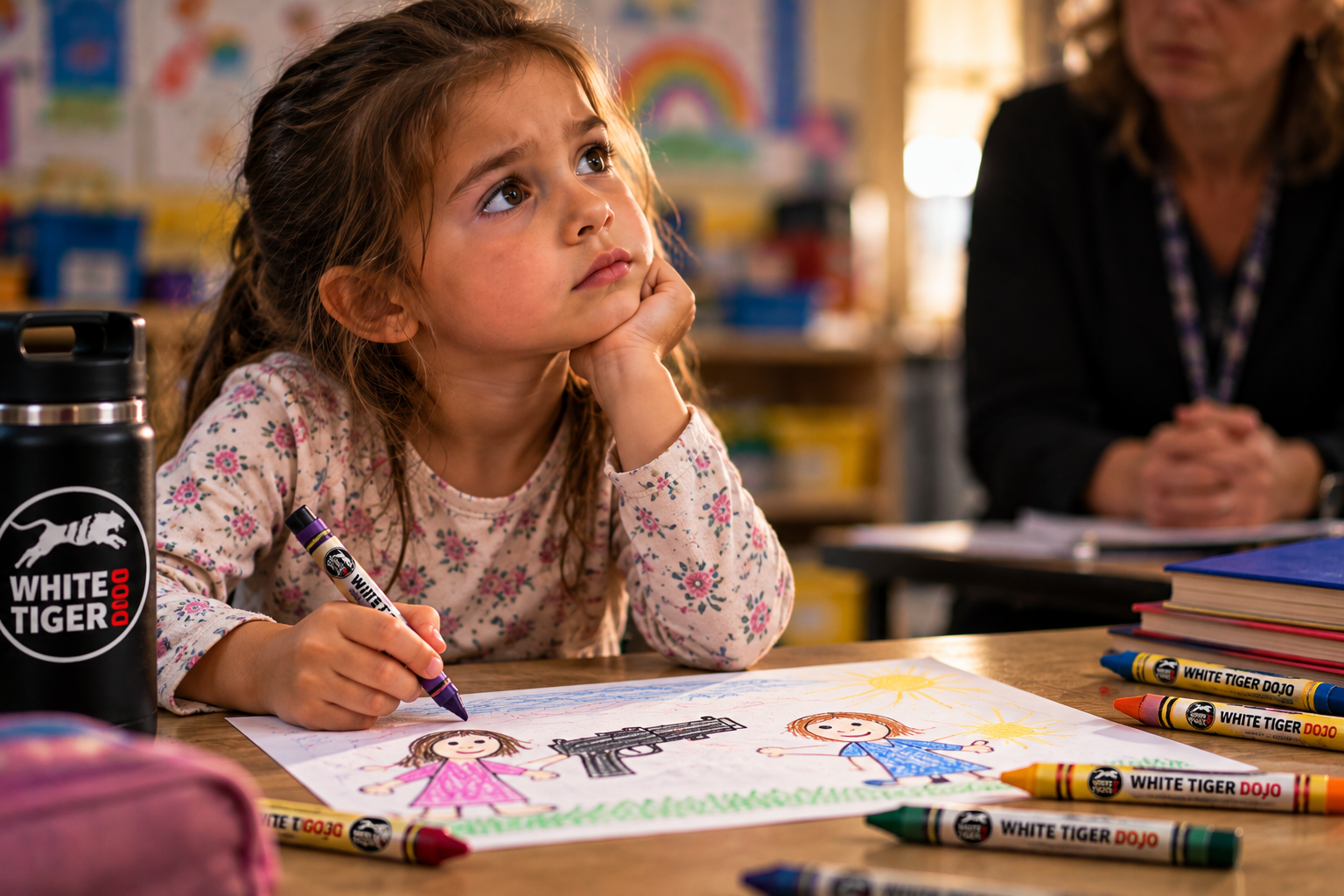
BERKELEY HEIGHTS, NJ: Recently, an article was published out of Alabama about a five-year-old girl who was reportedly required to sign a contract promising not to harm herself or anyone else.
I'd like to set aside the legal questions and concentrate on something that concerns me more as an educator:
What happens when the adults responsible for protecting a child misunderstand the child they're trying to protect?
Children Need to Feel Safe Enough to Express Themselves
As an educator, I want to encourage honesty and self-expression in a safe environment for my students, regardless of their age.
Not only do my students learn more about themselves when they're encouraged in this way, but I also get to learn more about them.
This is especially important because my teaching focuses on conflict resolution through the study of martial arts.
Since we only have direct control over ourselves, conflict resolution begins within oneself.
Children need opportunities to express their thoughts, ask questions, make mistakes and explain what they meant.
If we're too quick to interpret their behavior through our own fears, we may miss the opportunity to understand what they're actually communicating.
Trust Between Students and Teachers Is Essential to Learning
Self-confidence and self-protection develop, in part, through self-awareness and an understanding of the world around us.
Educators should not only promote learning inside the classroom, but also help provide the security and foundation that encourage learning outside of it.
That requires trust.
A child should feel comfortable telling a teacher when something is wrong.
When they're afraid.
When they're confused.
When they've made a mistake.
And even when they've said or done something they don't fully understand.
If children become afraid that their words will automatically be interpreted in the worst possible light, they may become less willing to speak openly.
And when children stop communicating, adults lose valuable opportunities to understand and help them.
Responding to Children's Behavior Requires Understanding Their Intent
Parents entrust educators with their children's safety and education for a substantial portion of the day.
That responsibility should never be taken lightly.
But neither should the responsibility to understand the child.
For the sake of discussion, let's assume the girl drew a gun in crayon.
Let's also assume she pointed her crayon at a friend and said, "Pew pew."
Finally, let's remember that we're discussing a five-year-old girl expressing herself.
We could ask why she drew the gun.
We could ask what she meant when she pointed the crayon.
We could explore whether she was imitating something she'd seen or heard.
And if there were genuine concerns about her safety or someone else's, those concerns should absolutely be evaluated.
But why begin by assuming the most alarming interpretation?
Before deciding what a child's behavior means, shouldn't we first try to understand what the child meant?
Protecting Children Shouldn't Mean Projecting Adult Fears Onto Them
I understand that educators have a responsibility to take concerning behavior seriously.
But there's a difference between taking something seriously and interpreting it accurately.
A five-year-old doesn't necessarily understand the implications of words or actions the way an adult does.
And an adult's understanding of violence, danger and consequences should not automatically become the explanation for a child's behavior.
In the reported incident, the school apparently believed its response was appropriate to the situation.
Perhaps the intention was to ensure that no one would be harmed.
But I question whether asking a child that young to sign a contract involving concepts she may not understand was an effective or developmentally appropriate response.
Good intentions don't automatically produce good decisions.
And sometimes the actions we take in the name of protection deserve just as much scrutiny as the behavior that prompted them.
Safety and Education Should Work Together
An educator's responsibility isn't simply to identify potentially dangerous behavior.
It's also to teach.
To ask questions.
To listen.
To distinguish between imagination, misunderstanding, inappropriate behavior and a genuine threat.
And to respond in a way that is appropriate to the child's age and circumstances.
Sometimes that may require intervention, including professional evaluation when there is a credible safety concern.
Other times, it may simply require a conversation.
But either way, the response should be guided by an understanding of the child, not merely by the adult's fear of what might happen.
A missed opportunity to understand a child can also become a missed opportunity to teach one.
When Does the Cure Become Worse Than the Fear?
It is my contention that the adults in this situation may have presumed the young girl's intentions based upon their own perceptions.
They may have projected adult experiences and knowledge onto a child who understood the situation very differently.
If so, what began as an effort to protect a child may instead have created unnecessary confusion and distress.
That doesn't mean educators should ignore warning signs.
Quite the contrary.
It means that protecting children requires enough judgment to distinguish a genuine warning sign from behavior that simply looks alarming through adult eyes.
So I ask the reader:
When does the "cure" become worse than the "fear"?
Or worse:
When does the "cure" create the very fear it was meant to eradicate?