
The Immediate Gratification Trap
Children live in a world where entertainment, information and rewards can arrive instantly. Learning to wait, work and persevere helps them develop self-control and discover the satisfaction of earning something difficult.
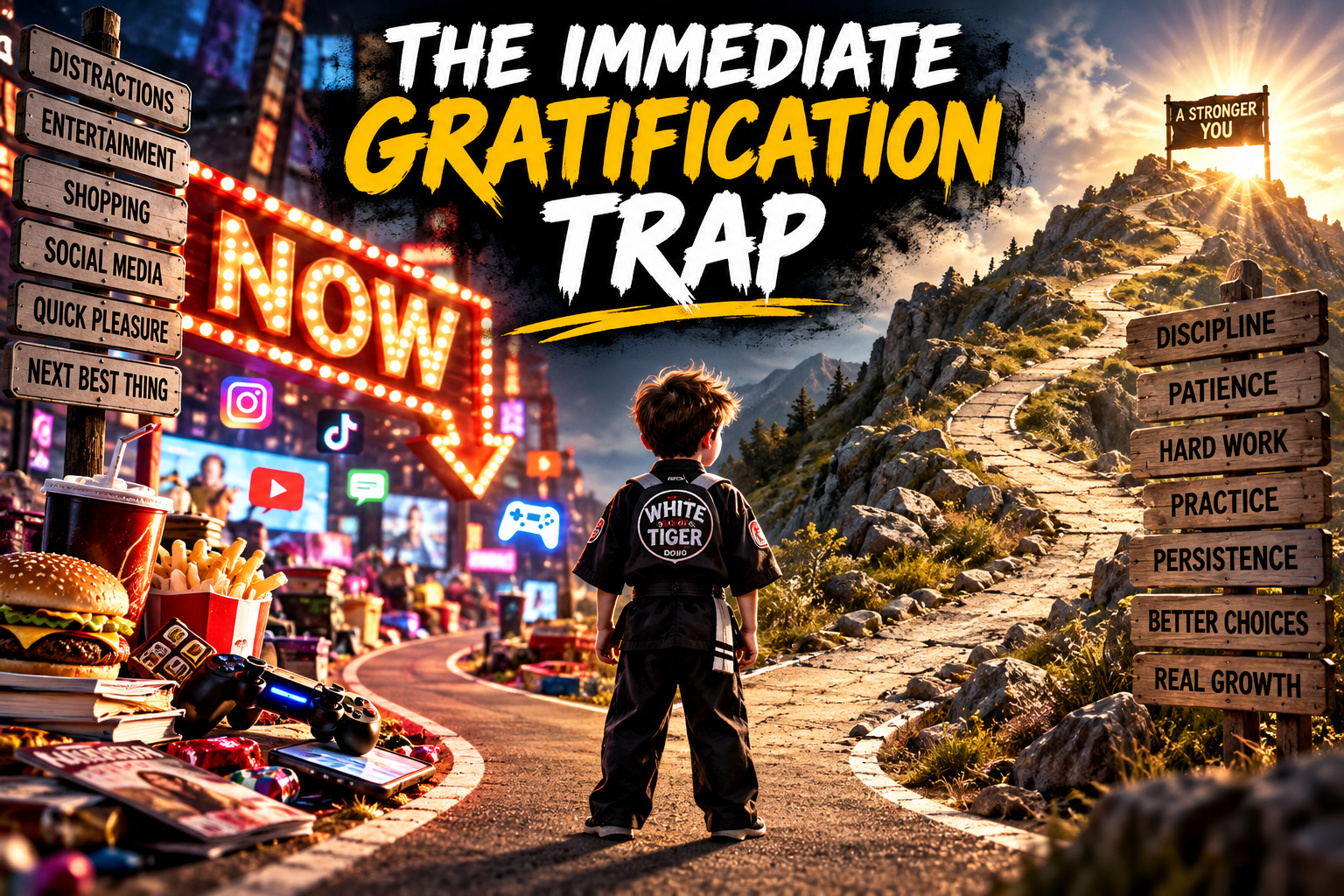
BERKELEY HEIGHTS, NJ: Immediate gratification is one of those guilty pleasures that many of us engage in, even while recognizing that it isn't always good for us.
In its best form, immediate gratification is a warm smile, a seat given up by a stranger, or a big hug from a close friend or family member before you even knew you needed it.
Nothing wrong with any of those.
The problem begins when "what I want right now" repeatedly becomes more important than "what I want eventually."
Why Immediate Gratification Is So Difficult to Resist
Economists and psychologists have studied our tendency to value rewards available right now more heavily than rewards that arrive later.
In plain English:
We sometimes choose immediate gratification even when we know our future selves probably won't appreciate the decision.
That's hardly surprising.
Immediate gratification is like the trashy magazine or candy bar sitting at the checkout counter.
You didn't drive to the supermarket looking for it.
It wasn't on your list.
But there it is.
You grab it, pay for it and slip it into your grocery bag.
It's so fast that it's almost like it didn't happen.
Almost.
The Beast of "Now" Is Insatiable
We're surrounded by opportunities to get something immediately.
Entertainment.
Information.
Food.
Shopping.
Attention.
Approval.
Answers.
Technology has made many genuinely useful things faster and easier.
That's wonderful.
But it has also made distraction faster and easier.
There's always another notification.
Another video.
Another headline.
Another game.
Another thing to buy.
Another answer available before we've spent much time thinking about the question.
The beast of "now" is insatiable.
Before we've satisfied one desire, another one is already demanding our attention.
We Often Procrastinate on What We Need by Doing What We Want
What exactly are we rushing toward?
Usually, completion.
Now, I completely understand the desire for immediate completion when it comes to dirty laundry and dirty dishes.
The irony is that many of us procrastinate on the things we need to do and replace them with distractions we want to do.
That's an interesting contradiction.
We want results immediately.
But we don't always want to immediately begin the work required to produce them.
Placing too much energy into immediately gratifying distractions can rob us of the time and concentration required for tasks that actually matter.
More importantly, it can rob us of something else:
The experience of working toward something.
Technology Can Make Patience More Difficult to Practice
Technology is supposed to help us organize our lives and leverage our productivity.
And often it does.
But technology can also create the expectation that everything should happen as quickly as the technology delivering it.
Information appears instantly.
Messages arrive instantly.
Entertainment begins instantly.
Purchases can happen almost instantly.
Answers appear in seconds.
Human development doesn't work that way.
You can't download patience.
You can't stream discipline.
You can't swipe your way through perseverance.
And there's still no "skip intro" button for becoming competent at something difficult.
Extraordinary Results Usually Require Ordinary Repetition
This is where immediate gratification can distort our expectations.
We see the finished product.
The black belt.
The successful business.
The accomplished musician.
The great athlete.
The confident speaker.
The excellent student.
What we don't always see are the thousands of ordinary moments that produced them.
Practice.
Mistakes.
Repetition.
Frustration.
Adjustment.
Boredom.
Patience.
Trying again.
When we see extraordinary results without seeing the ordinary work behind them, it's easy to underestimate how long meaningful accomplishment actually takes.
Then, when our own results don't arrive quickly enough, we assume something is wrong.
Maybe this doesn't work.
Maybe I'm not good at this.
Maybe there's a faster method.
Maybe I should try something else.
And off we go in search of the next best thing.
Children Need to Experience the Difference Between Getting and Earning
This becomes particularly important with children.
There's nothing inherently wrong with giving children things.
Childhood should contain joy, surprises and plenty of things that don't have to be earned.
But children should also have opportunities to experience the satisfaction that comes from working toward something.
There's a difference between:
Getting something and Accomplishing something.
One can happen almost immediately.
The other requires participation.
A child practices something that was difficult.
They struggle.
They make mistakes.
They improve.
Eventually, they can do something they couldn't do before.
That feeling can't simply be handed to them.
They have to earn the experience of becoming capable.
Delayed Gratification Isn't About Denying Yourself Everything
There's a danger in taking this idea too far.
Delayed gratification doesn't mean everything enjoyable needs to hurt first.
And discipline doesn't mean refusing ourselves every pleasure because someday there might be a more productive use of our time.
That's not much of a life either.
The skill is learning to recognize the difference between:
Enjoying the present and sacrificing what matters tomorrow for whatever happens to feel good today.
Sometimes eat the candy bar.
Sometimes play the video game.
Sometimes waste an afternoon.
Sometimes do absolutely nothing productive.
But also learn how to put those things aside when something more important requires your attention.
That's self-control.
Meaningful Accomplishment Takes Time
Long-term success requires long-term habits.
So do long-term relationships.
So does education.
So does physical fitness.
So does martial arts.
So does almost anything else worth becoming genuinely good at.
Hard work, perseverance and patience aren't particularly exciting.
They don't promise instant transformation.
They don't fit neatly into a thirty-second video.
But they have something immediate gratification can never offer:
They allow us to become different people through the process of pursuing something difficult.
Perhaps that's what we lose when we're always rushing toward the finish line.
The destination matters.
But so does everything we had to become in order to reach it.
Extraordinary achievement is usually built from very ordinary things, repeated long enough to become extraordinary.