
What To Do About “Me Too”? How Do We Teach Children to Speak Up and Protect Themselves?
Inspired by the #MeToo movement, this reflection explores how teaching children boundaries, respect, self-control and self-defense can help them become more capable of protecting themselves and supporting others.
"Antifragility is beyond resilience or robustness. The resilient resists shocks and stays the same; the antifragile gets better."
-Nassim Nicholas Taleb, Antifragile: Things That Gain from Disorder
BERKELEY HEIGHTS, NJ: When I reflect upon the wave of people posting the phrase "Me Too," indicating that they have experienced sexual harassment or assault, all I can think is:
These adults were once children.
And I am saddened that so many people have been subjected to these experiences.
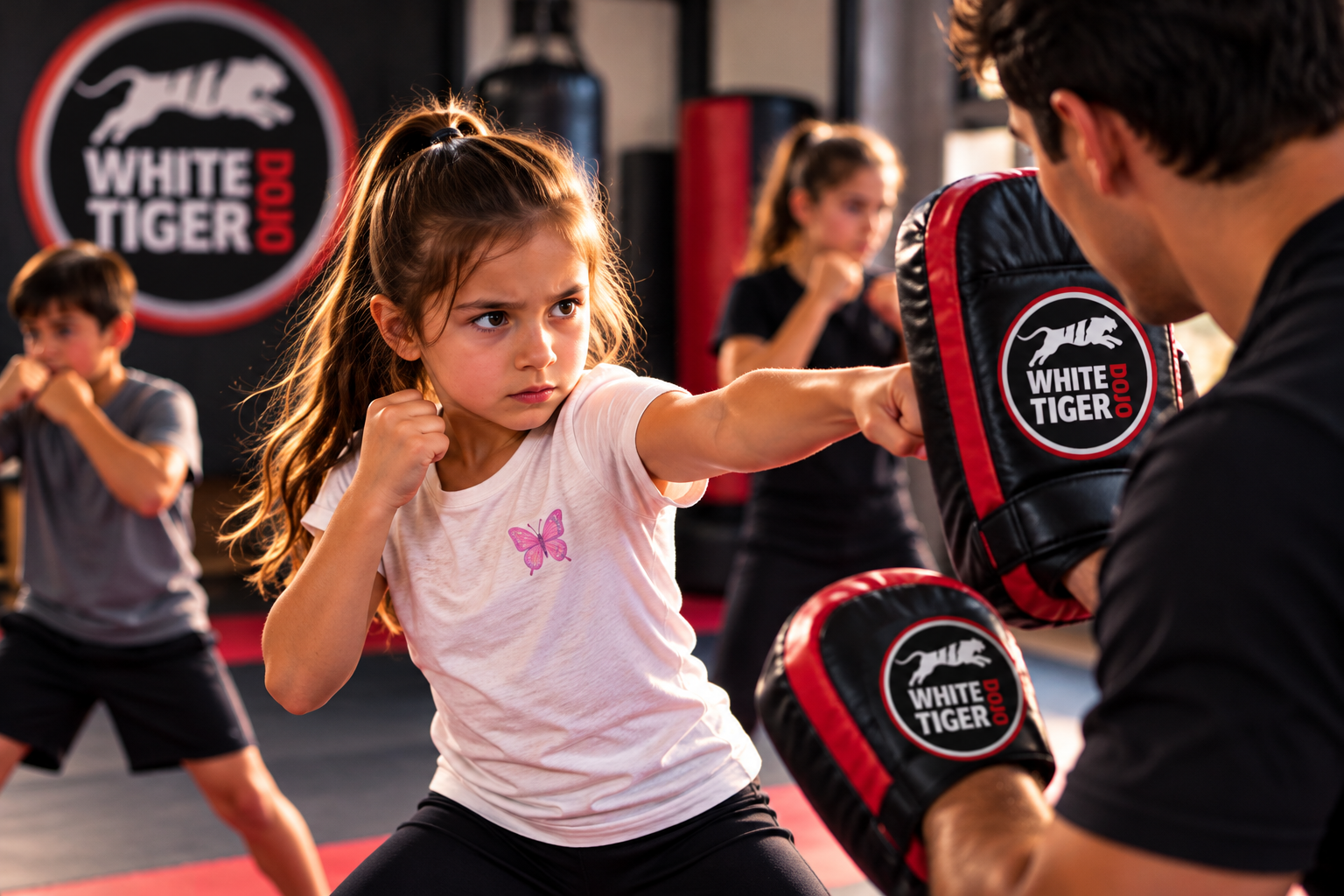
It also reinforces something I've believed throughout my years of teaching martial arts: we need to equip children with the mental, verbal and physical tools to recognize danger, establish boundaries and protect themselves whenever possible.
For more than twenty years, I've worked to help children develop and protect their boundaries, respect themselves and others, become more self-reliant and develop the discipline necessary to make difficult decisions.
Not because these skills can prevent every act of violence.
They can't.
But because preparation gives children more options when difficult situations arise.
Teaching Children to Recognize Their Worth and Establish Boundaries
I like being an agent of change.
My goal has always been to empower young men and women and help them develop into the best people they can become.
For young women, this can be particularly important.
Our society has not always portrayed strong, powerful women positively. Assertiveness in a girl may be interpreted differently from the same behavior in a boy.
Some girls grow up being encouraged to accommodate others, even when doing so makes them uncomfortable.
But kindness should never require surrendering personal boundaries.
Girls need opportunities to discover their strength, use their voices and understand that they have every right to establish and protect their personal space.
Boys need those same lessons.
We sometimes assume that boys will naturally become strong, capable men who know how to handle themselves simply because they're boys.
But physical strength doesn't automatically produce judgment.
And confidence doesn't automatically produce self-control.
Strength, responsibility and respect have to be taught and practiced.
After all, the body cannot go where the mind has never gone.
Boys and Girls Both Need to Practice Speaking Up
A boy who has never been challenged to accept responsibility may struggle to recognize when he needs to challenge someone else's behavior.
A boy who has been taught that authority should never be questioned may hesitate when an authority figure behaves inappropriately.
Likewise, a girl who has never been encouraged to speak up for herself may find it difficult to establish a boundary when someone makes her uncomfortable.
These aren't inevitable outcomes.
But they are reasons to teach children something beyond simple obedience.
Children need to know how to say:
"No."
"Stop."
"That's not okay."
"I need help."
They also need to know that asking for help isn't surrendering responsibility.
Sometimes it's the most responsible thing they can do.
And when someone else is being mistreated, they need to understand that speaking up, seeking help or safely intervening can be an act of courage.
Self-Defense Training Should Include Safe, Controlled Challenges
One of the most valuable things about martial arts is that students can practice dealing with resistance in a controlled environment.
A training partner may be bigger.
Stronger.
Faster.
More experienced.
Or simply more determined.
That doesn't mean the exercise should be frightening or overwhelming.
It means the student has an opportunity to practice making decisions under manageable pressure.
Where do I stand?
How do I create distance?
How do I communicate a boundary?
When should I disengage?
When should I ask for help?
What do I do when my first attempt doesn't work?
Students should have opportunities to practice with different partners, including partners of different sizes, strengths and genders, when appropriate to their age, readiness and comfort.
The objective isn't to make children comfortable with being mistreated. It's to help them become more capable of recognizing and responding to inappropriate behavior.
And that requires trust between the student, the instructor and the training partner.
Respect and Self-Control Are Responsibilities, Not Just Self-Defense Skills
Teaching children to protect themselves is only half of the equation.
We also need to teach them not to become the person from whom someone else needs protection.
That's why I believe boys and young men should learn to respect boundaries, recognize coercive behavior and understand that physical strength never entitles someone to control another person.
But this responsibility doesn't belong exclusively to boys.
Every student needs to learn that another person's boundaries deserve the same respect they expect for their own.
Strength without judgment can become intimidation.
Confidence without empathy can become arrogance.
And authority without accountability can become abuse.
The study of martial arts should challenge those behaviors, not celebrate them.
Finding Your Voice Before Conflict Escalates
What I find particularly troubling about many of the stories surrounding the #MeToo movement is the number of people who later acknowledged that they knew something inappropriate was happening.
Some witnessed behavior they should have challenged.
Some were afraid of retaliation.
Some didn't understand what they were seeing.
And some chose not to get involved.
Those circumstances aren't all the same, and neither are the responsibilities or options available to the people involved.
But I believe we can do better at preparing young people to recognize when something is wrong and understand what actions are available to them.
Sometimes that means speaking directly.
Sometimes it means supporting the person being mistreated.
Sometimes it means reporting the behavior to someone who can intervene.
And sometimes the safest decision is to leave and get help.
Courage isn't always confronting someone. Sometimes it's refusing to remain silent when you have a safe opportunity to act.
The Body Cannot Go Where the Mind Has Never Been
I've said this many times throughout my years of teaching:
The body cannot go where the mind has never been.
If we've never considered what we might do in a difficult situation, making that decision under pressure can become considerably harder.
That's why we practice.
We practice using our voices.
We practice creating distance.
We practice recognizing boundaries.
We practice cooperating with partners.
We practice dealing with resistance.
And we practice understanding that protecting someone else may require a different response from protecting ourselves.
None of this guarantees that a student will respond in a particular way during a real incident.
Real situations are unpredictable, and freezing, complying or being unable to resist can be involuntary responses to danger.
But preparation can expand our choices.
And having more choices is part of becoming more capable and independent.
Can Our Community Become Part of the Solution?
This is what I want White Tiger Dojo to contribute to our community.
When I originally wrote this article, I proposed bringing young men and women together for seminars focused on respect, boundaries, self-protection and preventing unnecessary violence.
One seminar, called "Man Up," was designed to help young men develop the courage to respect others, challenge inappropriate behavior and protect those who need assistance.
I also wanted to offer young women opportunities to practice establishing boundaries, speaking up and standing together against harassment and violence.
The specific events belonged to that moment in time, but the purpose behind them remains important.
We should be teaching children to recognize their worth.
To respect the worth of others.
To develop good judgment.
To find their voices.
And to understand that strength is not simply the ability to protect yourself, but the willingness to use your abilities responsibly.
We also need to hold ourselves accountable as adults and as a community.
Are we teaching children what to do when something is wrong?
Are we demonstrating those behaviors ourselves?
Are we creating environments where people can speak openly and seek help without shame?
Or are we waiting until something terrible happens before deciding that something should have been done?
I believe we have an opportunity to be agents of positive change.
The question is whether we're willing to take it.
Will you help be part of the solution?