
Stand Up Straight and Speak Up!
Self-defense begins long before a punch or kick. Teaching children to stand confidently, speak clearly and communicate personal boundaries can give them more options when conflict begins.
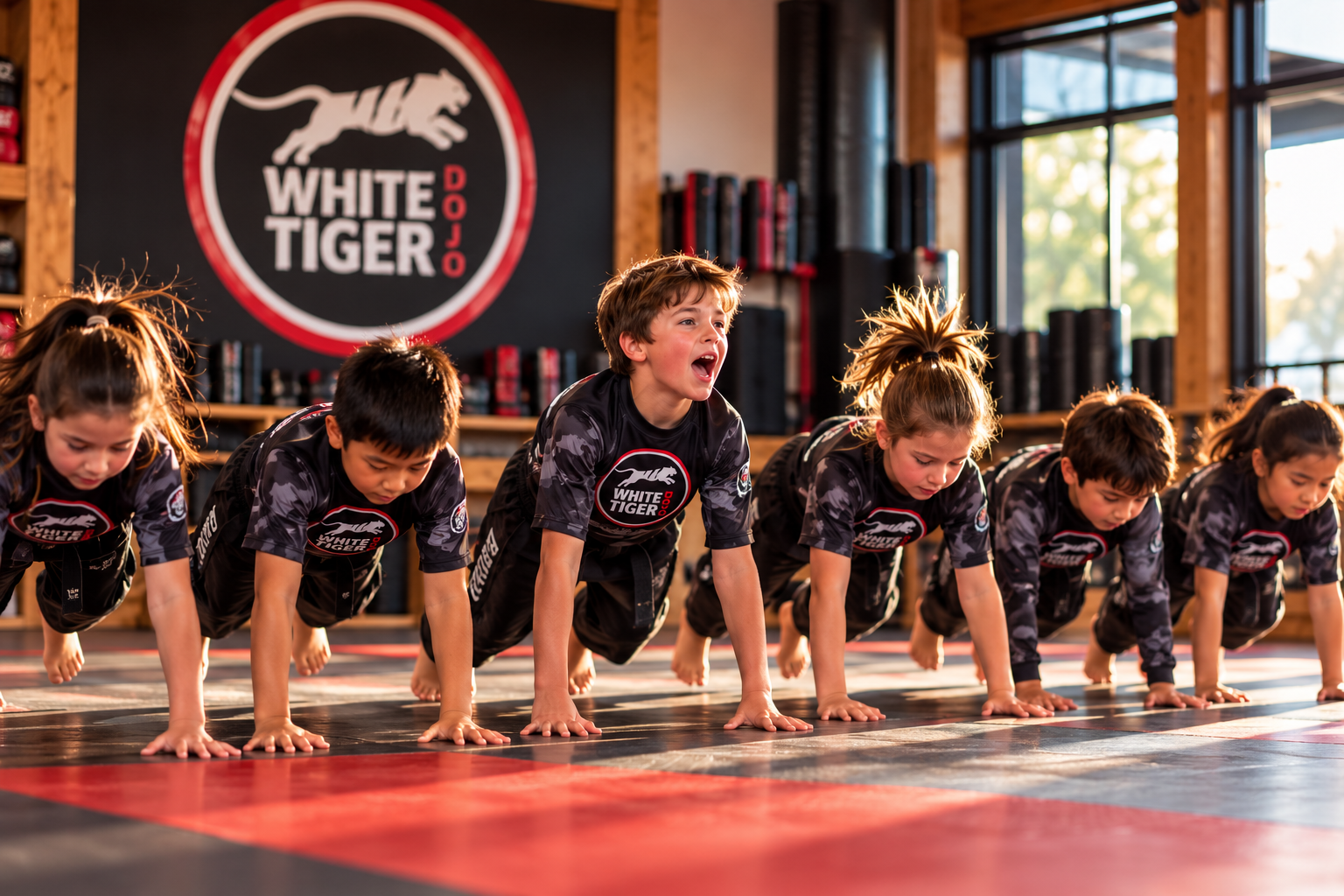
BERKELEY HEIGHTS, NJ: We have a tradition at our dojo where every student eventually takes the class through a warm-up exercise.
That means standing in front of everyone.
Speaking loudly enough to be heard.
Giving clear instructions.
And occasionally dealing with a room full of people who aren't paying quite as much attention as you'd like.
It may look like we're simply teaching students how to lead jumping jacks or stretches.
We're practicing something much more important.
We're teaching them to stand up straight and speak up.
Speaking Up Is Part of Self-Defense
It's important to be able to communicate our boundaries in order to establish our needs, wants and personal safety.
Before a student ever has to punch, kick or physically defend themselves, I want them to be capable of looking at another person and clearly communicating:
“No.”
“Stop.”
“Back up.”
“Leave me alone.”
Those are self-defense skills too.
If we can't communicate our boundaries, we may allow a situation to progress until our options become much more limited.
That's why using your voice can be one of the most important tools you have.
Confidence Changes How We Interact With the World
We've all seen nature shows depicting lions chasing a herd of gazelles.
The lion isn't usually interested in making the hunt unnecessarily difficult. Vulnerability and opportunity matter.
Human behavior is obviously considerably more complicated than a nature documentary, and people aren't gazelles.
But there's still a useful lesson in the metaphor.
How we carry ourselves communicates information.
Posture.
Eye contact.
Awareness.
Movement.
Voice.
None of these things guarantees that another person will leave us alone, nor does someone's posture ever make them responsible for another person's bad behavior.
But confident communication can help us establish a boundary earlier, before a situation has the opportunity to escalate.
Establish Your Boundaries Before Someone Else Does
When we fail to communicate our boundaries, we can sometimes find ourselves reacting to a situation rather than helping define it.
Someone moves too close.
Someone touches us when we don't want to be touched.
Someone pressures us into doing something.
Someone speaks to us in a way we aren't willing to accept.
If we wait until the situation becomes intolerable, our options may become narrower.
So we practice recognizing the problem earlier.
See what's happening.
Understand what you need.
Then communicate it.
Clearly.
Standing Up Straight Isn't About Looking Tough
Think about someone standing upright, looking where they're going and speaking clearly.
What does that communicate?
Awareness.
Purpose.
Confidence.
Engagement.
That's very different from trying to look intimidating.
I don't want our students walking around attempting to convince everyone they're the toughest person in the room.
I want them comfortable occupying their own space.
There's a difference.
Good posture and a clear voice don't say:
“I'm looking for a fight.”
They say:
“I'm here. I'm aware. And I'm capable of speaking for myself.”
Sometimes the Best Self-Defense Is a Boundary
This is why we take the time to teach our students how to stand up straight and speak up.
Leading a warm-up may seem like a small responsibility.
But for a child who is uncomfortable being heard, standing in front of a class and confidently counting exercises can be an enormous accomplishment.
Eventually that same voice may need to ask a question.
Disagree with a friend.
Tell someone to stop.
Ask an adult for help.
Or establish a personal boundary before a situation gets worse.
Physical self-defense matters.
But if awareness, posture and communication can help us recognize and address a problem before physical force becomes necessary, that's better.
Because one of the most important lessons we teach is still one of the simplest:
We win all of the fights we avoid.