
The Nuclear Option: Why Every Child Needs to Know When to Ask for Help
Children aren't safe simply because someone tells them they are. Real safety comes from awareness, the confidence to establish boundaries, and knowing when a problem requires the help of parents, teachers, or other trusted adults.
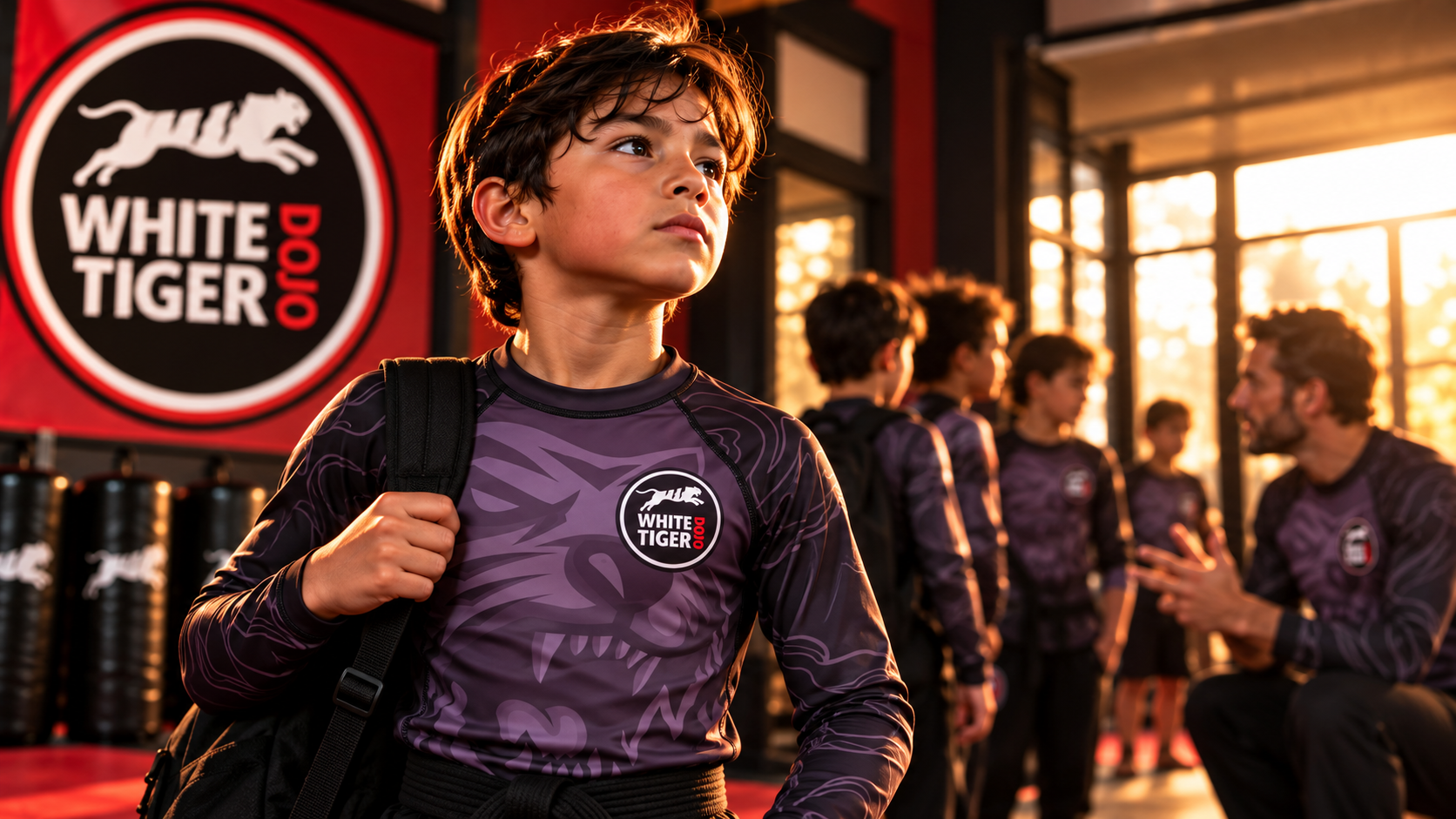
BERKELEY HEIGHTS, NJ: One of the first lessons I teach is speaking up for yourself. There are only two ways to interact with other human beings: verbally or non-verbally. If you do not have skills in both, you are relegated to only ONE kind of interaction.
Once this premise is set, the next premise is equally as simple. We are our own first responders.
It is extremely rare that someone else understands the level of danger we're in unless it's an adult watching a toddler precariously perch along the edge of a chair-and-a-half in the living room. Not that I've ever experienced that before.
Look. Listen. Learn. The Foundation of Personal Safety
The next premise is comprised of WTD's Three Ls: Look. Listen. Learn.
Awareness sets the stage for our surroundings, be it people, places (street versus library awareness), or things (think cars, exits, etc.).
I call this the changing of thresholds. What one is prepared to expect when entering the dojo is very different from what one should expect when stepping out into a busy parking lot.
The Three Ls are still present, but whereas before students were learning about personal safety, now they have to enact those skills in the real world.
Which brings me to the lie of "safe spaces," as there is no such place, no matter how hard we try.
I'm not even talking about the extreme kind that lands on the front page of your favorite news site. I'm talking about classic human behavior in the classrooms of American schools as children learn the ancient art of hierarchical social shuffling.
Young men trying to figure out "where they fit" in their peer group as compared to their social, emotional, intellectual, and often physical skills.
Young women trying to figure out "where they fit" in their peer group as compared to their social, emotional, intellectual, and often physical looks.
Both parties have to learn to deal with these pressures, and notice how only the last pressure is different, yet still based in the physical space.
When a Safe School Isn't Enough
The school system can tell you that your kids are safe, and generally speaking, that is correct. But as I've written in numerous blogs prior to this one, it does not take too many negative interactions to make some permanent changes to your child's behavior.
I recall a story about a young student I taught for several years. He never told me or his parents anything about what was going on at his school.
This was a local school to WTD, ranked in the top 40 in New Jersey and the top 500 in the nation.
Years later, I ran into him and his mother, and we rekindled a “business advice relationship”. I encouraged him to chase his dream, with a few caveats and a few phone numbers to help him on his way. He was just out of college. (side note: the business has done extremely well, and he is now married, and they have a 2 year old)
The next time I ran into his mother, she told me that he had never shared how abusive and intolerable his entire educational experience had been, from grade school through high school.
She credited me with helping him navigate his awful experience, along with her son's quiet resolve.
He never once told his parents until after he started college.
This is a close family with healthy ties to each other, even today.
The Nuclear Option: Knowing When to Ask for Help
This is why all grade school kids need to know how to defend themselves, because the public schools cannot do it for them. Have you ever tried to stop one of your children from doing something mean to the other? Action beats reaction every single time.
Children need to know how to handle the problems they can on their own, discern the difference between those they can and cannot, and feel confident in exercising the nuclear option: getting the aid of their parents, teachers, counselors, and administrators.
That is not weakness. That is knowing when a problem requires more than one person to solve it.
Kids aren't safe because someone says they're safe.
Kids are safe because they know how to establish and maintain verbal and physical boundaries, and because those boundaries are reinforced by the adults responsible for protecting them.