
Trust Me
Trust isn't something we can demand. It's something we develop through experience, consistency, and the willingness to rely on one another. In martial arts, as in life, meaningful progress often begins when we learn to trust.
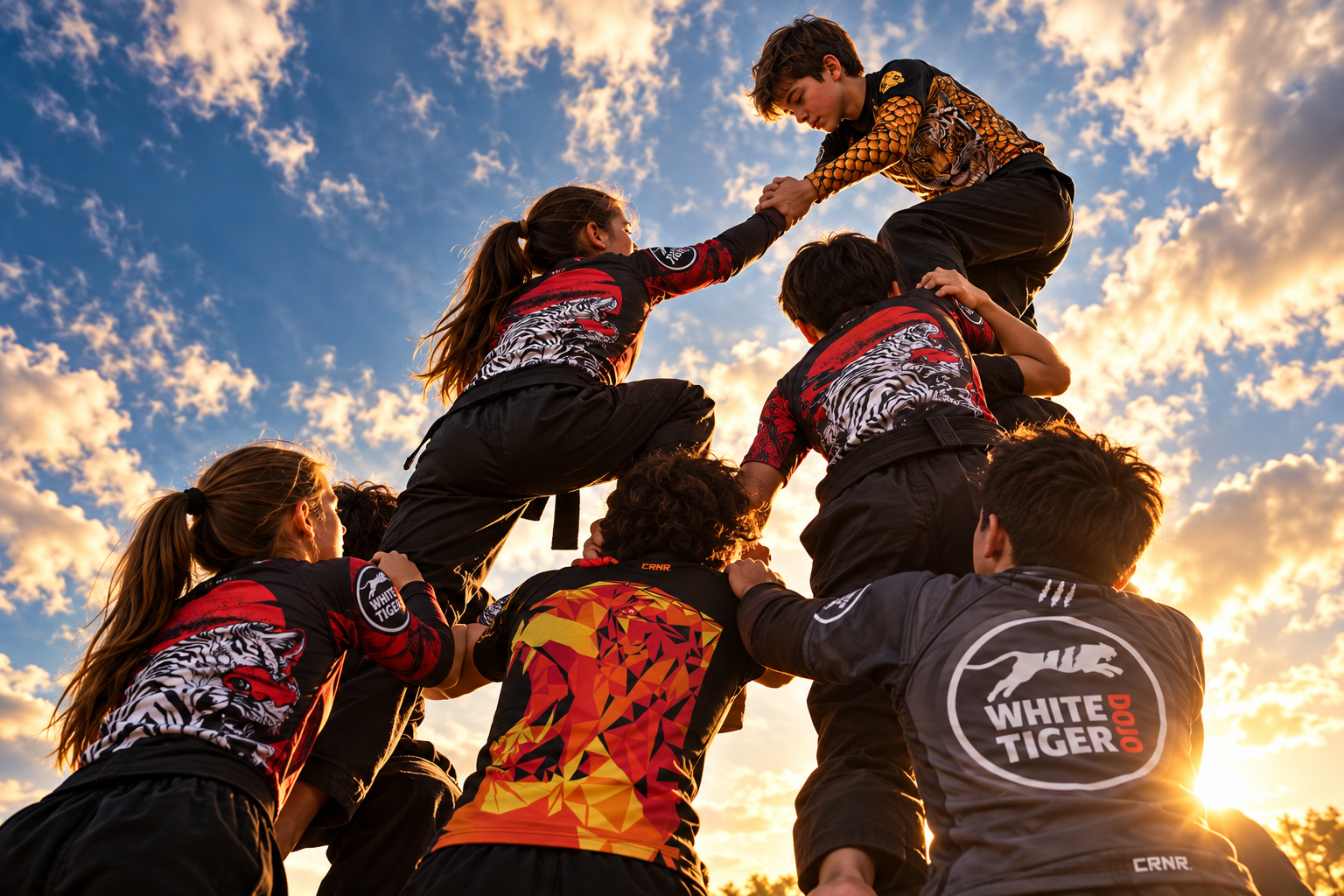
(Part 6 of a Series)
"Trust is the glue of life. It's the most essential ingredient in effective communication. It's the foundational principle that holds all relationships."
- Stephen Covey
BERKELEY HEIGHTS, NJ: Learning how to differentiate between kids who were just acting friendly and kids who were actually my friends was one of the toughest obstacles I had to overcome in my younger years.
I simply wasn't always sure who my friends were because I didn't know exactly who I was yet.
Without a clear understanding of the self, making positive and effective decisions about the self is nearly impossible.
Eventually, I learned how to trust my own instincts and take ownership of my own actions.
And something interesting happened.
I began to attract and gravitate toward people who shared many of the same beliefs, values and goals that I did.
In other words, I became better at differentiating between people who were simply complying with social niceties and people with whom I could develop genuine trust.
Before I could decide whom to trust, I had to develop enough self-awareness to trust my own judgment.
Trusting Other People Begins With Learning to Trust Yourself
Trust can sound like something we give another person.
But first we have to make a decision.
Do I trust this person?
How much?
With what?
Under what circumstances?
That requires judgment.
And judgment becomes considerably more difficult when we don't understand our own values, boundaries or responsibilities.
Learning to trust myself didn't mean believing I would always be right.
It meant becoming willing to make decisions, accept responsibility for those decisions and adjust when I got them wrong.
Self-trust isn't certainty. It's confidence in our ability to make a decision and take responsibility for what follows.
We Trust Other People More Often Than We Realize
Choosing to trust people is a daily necessity that happens far more often than many of us probably realize.
I sometimes think about how easily I trust complete strangers with my own life and livelihood.
Every time I drive down the road, another person is driving in the opposite direction only a few feet to my left.
I trust that person to stay on their side.
I trust people I've never met to create and maintain systems I depend upon.
I trust financial institutions with my money.
I trust people who prepare my food.
I trust engineers who designed the bridges I drive across.
Modern life would become almost impossible if we refused to trust anyone.
Yet trusting someone standing directly in front of us can sometimes seem considerably more difficult.
So perhaps the question isn't whether we should trust.
The better question is how we decide where our trust belongs.
Trust Often Begins With Small Interactions
Trust usually doesn't begin with some enormous act of faith.
It begins with little things.
Introducing yourself.
Looking someone in the eye.
Exchanging basic pleasantries.
Listening.
Following through on something you said you would do.
Respecting a boundary.
Being honest when honesty isn't particularly convenient.
I've always believed that the first few moments between people matter.
They aren't enough to tell us everything about another person, of course.
But they begin giving us information.
And trust develops from there.
Trust isn't necessarily something we give all at once. It can be built a little at a time.
Martial Arts Training Requires Trust Between Partners
I like to use analogies when I teach because they help build the unknown into a known template.
They give students something familiar to connect with something unfamiliar.
Trust works much the same way in martial arts training.
Whether I'm teaching a new technique or physically practicing that technique with a partner, we need to trust one another.
My partner needs to trust that I will maintain control.
I need to trust that my partner will communicate honestly.
We both need to respect the boundaries of the exercise.
And as the intensity increases, the amount of trust required increases with it.
Without trust, the exchange becomes less productive and potentially damaging to the relationship.
A good training partner doesn't simply give you resistance. They give you resistance you can trust.
Trust Doesn't Require Agreement
Another way I build trust is by remaining open to someone else's well-founded opinion.
That doesn't mean I automatically agree with them.
In fact, sometimes trust becomes more important precisely because we disagree.
If someone's opinion challenges one of my beliefs, the initial clash of perspectives can work in both our favors if we're willing to listen.
I try to understand what they're saying.
They have the opportunity to understand what I'm saying.
Maybe one of us changes our mind.
Maybe both of us do.
Maybe neither of us does.
But disagreement doesn't have to destroy trust.
Sometimes being able to disagree honestly is evidence that trust already exists.
Giving Someone Trust Can Be an Act of Strength
There's another side to trust that took me longer to understand.
Independence doesn't mean refusing to give anyone else influence over us.
Sometimes the intelligent decision is recognizing that another person knows more than we do.
A teacher.
A coach.
A doctor.
A friend.
A spouse.
A training partner.
Someone who has demonstrated enough judgment, character and competence that we're willing to place something important in their hands.
That's not necessarily surrendering independence.
Choosing to give the right person some control can be a courageous and intelligent act in and of itself.
The important word is choosing.
Trust shouldn't eliminate judgment.
It should be an expression of it.
The Right Relationships Can Help Us Make Better Choices
Learning to trust myself eventually helped me attract people into my life whom I could trust, sometimes even more than myself in particular circumstances.
It became increasingly clear that I wasn't "going at it alone."
Life is simply too complicated.
And I'm just one person.
Creating a team of people I trust has helped me develop better habits, challenge my assumptions and make better choices.
Sometimes I need someone to support my judgment.
Sometimes I need someone willing to challenge it.
And sometimes I need someone who knows when to do which.
That's one of the strange things about becoming more self-reliant.
Eventually, you become secure enough in yourself to recognize that you don't have to do everything by yourself.
Sometimes we all make better choices with a little help from our friends.